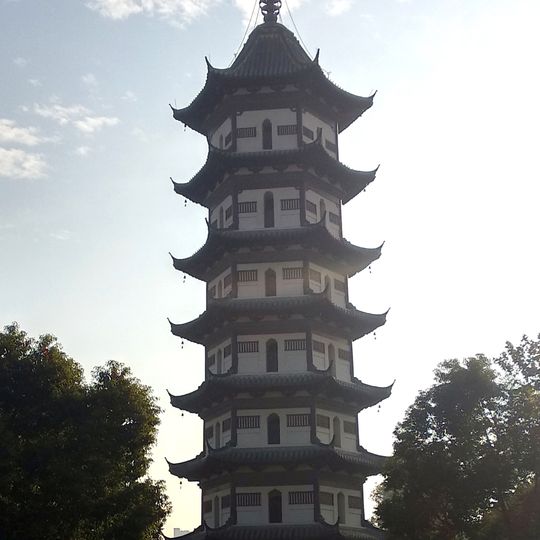
Tianshou Temple Pagoda, Buddhist pagoda in Guangde, China
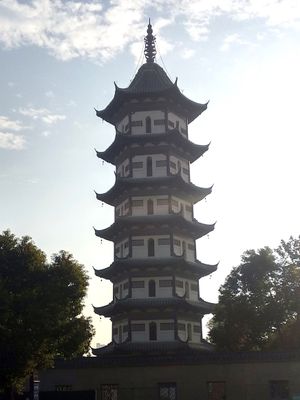
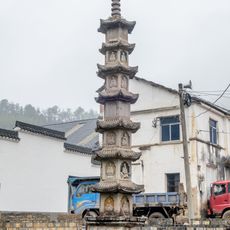
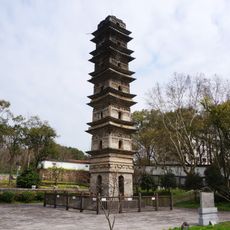
The Tianshou Temple Pagoda is a seven-storey, six-sided brick-and-wood pagoda of Jiangnan style, standing 42.8 m tall on a 46 m² base. Its brick body has six doors at ground level: three open for entry and three closed with Buddha niches. Each storey has hexagonal eaves with bronze bells, and the top is iron-pot shaped.
The pagoda was first built in 979, the fourth year of the Taiping Xingguo era of the Northern Song, as a five-storey brick tower with six gates. A fire destroyed it on the night of 27 October 1099, and from 1100 to 1105 Song Rong and his brothers led its rebuilding as a seven-storey tower. It was repaired in 1602 under prefect He Fengqi, again in 1668, 1772 and 1778, and lost its eaves, floors and top to a fire in 1900.
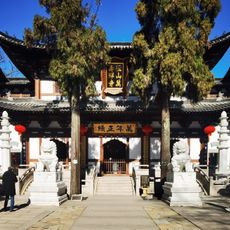
The pagoda takes its name from Tianshou Temple, founded as Tongtian Temple by the Chan master Fayuan in the Tang Tianyou era (904–907) and renamed Tianshou in 1602. The three closed ground-floor doors on the west, southwest and northwest sides each hold a niche whose Buddha figures no longer survive. Beside the pagoda stand a Tang-era well and a ginkgo planted in the Ming dynasty.
The pagoda is accessible from the exterior and can be viewed from multiple vantage points around the surrounding platform. Plan time to examine the ornamental details up close and take photographs from different positions around the site.
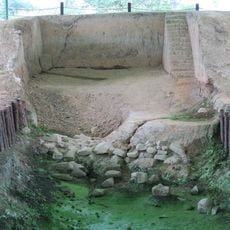
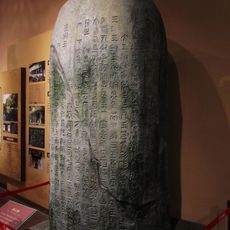
The pagoda has a straight-shaft central chamber rather than a solid core, and its brick stairs wind clockwise like those of the Wenbi Pagoda in Changzhou. The 1983 discovery of a crypt yielded a stone stele recording the tower's history. A Tang well and a Ming ginkgo survive beside it.
The community of curious travelers
AroundUs brings together thousands of curated places, local tips, and hidden gems, enriched daily by 93,194 contributors worldwide.