Jingshan Temple, Buddhist temple in northwest Hangzhou, China
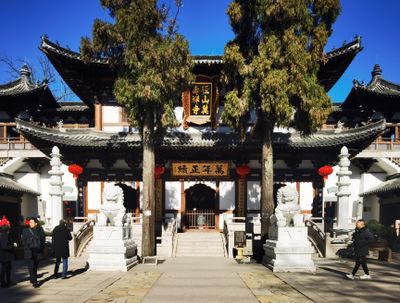
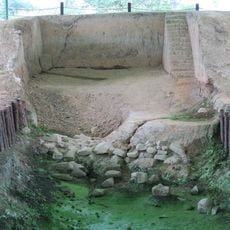
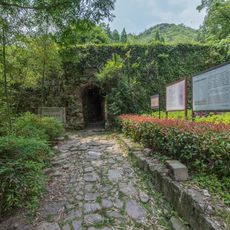
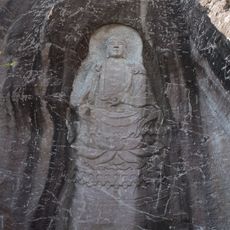
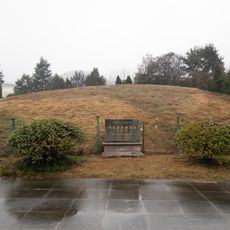
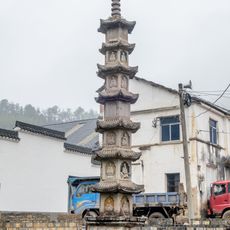
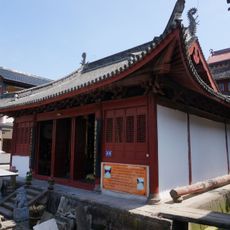
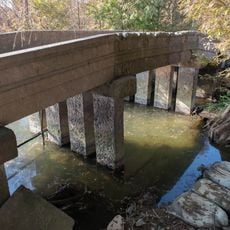
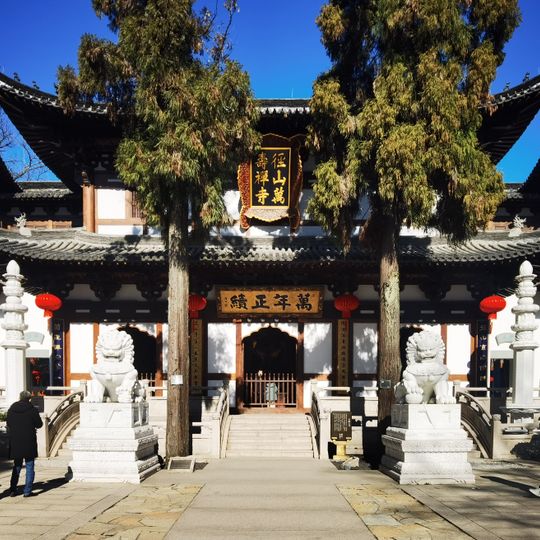
Jingshan Temple, formally Jingshan Wanshou Chan Temple, stands on the summit of Jingshan in Yuhang District, Hangzhou. The present complex was rebuilt on the original site in 1994; its axial layout follows the Song-era 'Jingshan system', with the mountain gate, halls and dharma hall aligned in sequence. The site of the original Tang foundation lies 500 metres northeast, where only a stone base and brick rubble remain.
Founded in 745 by the Chan master Jingshan Faqin, the temple was renamed by Emperor Daizong in 768 after his disciple Chonghui won a debate against a Daoist in Chang'an. Under abbot Dahui Zonggao in 1137 it housed 1,700 monks, and in 1166 Emperor Xiaozong gave it the name Xingsheng Wanshou Chan Temple. Ranked first among the Five Mountains and Ten Monasteries in the Southern Song, it was rebuilt on its original site in 1994 with Japanese Buddhist support.
The temple's name changed six times by imperial decree, from Qianyuan Zhenguo Yuan in 879 to Xiangyun Chan Temple under the Kangxi Emperor in 1705; locals still call it Jingshan Temple. Its tea banquet rituals and utensils are cited by the All Japan Sencha-dō Federation as a source of the Japanese tea ceremony, and the temple's miso is linked to the origin of Japanese soy sauce.
The temple stands on Jingshan peak in Yuhang district, reached by road up the mountain; the original Tang-era site lies 500 m northeast of today's buildings, where only a stone base and brick rubble remain. The 1994 reconstruction follows the Southern Song layout, with the mountain gate, halls and dharma hall on a central axis. Allow time for the climb and wear shoes suited to stone steps.
In 1254 the monk Kakushin returned from Jingshan to Kii-Yura and passed on the temple's miso-making method, from which Kinzanji miso developed; the liquid drawn off during that fermentation is cited as one origin of Japanese tamari soy sauce. In 1267 Nanpo Shōmyō is said to have carried a set of tea stands from Jingshan to Sōfuku-ji in Chikuzen.
The community of curious travelers
AroundUs brings together thousands of curated places, local tips, and hidden gems, enriched daily by 93,799 contributors worldwide.