Guanyin Pavilion, Yongsheng, Buddhist temple in Yongbei, China
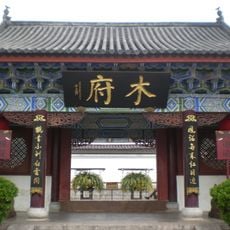
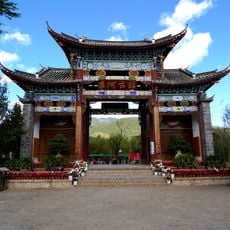
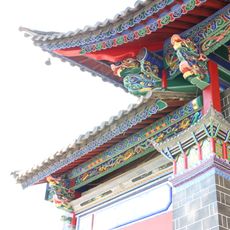
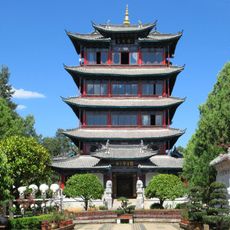
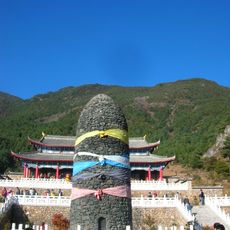
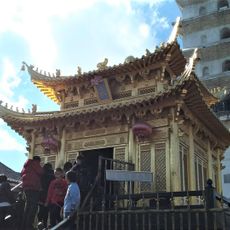
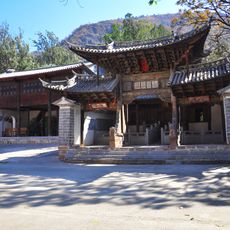
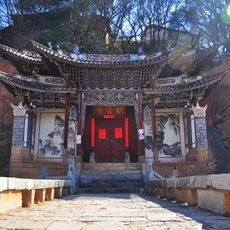
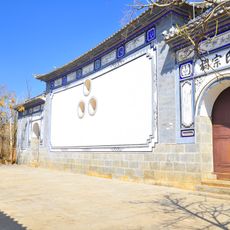
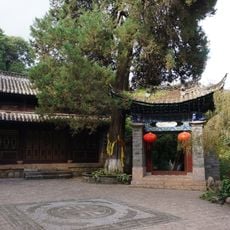
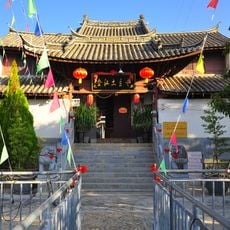
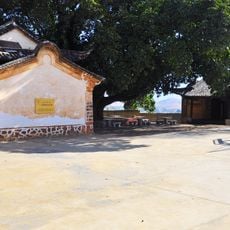
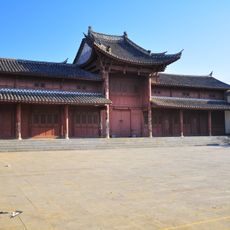
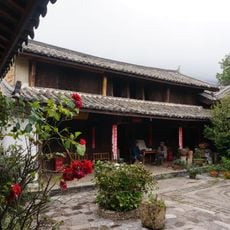
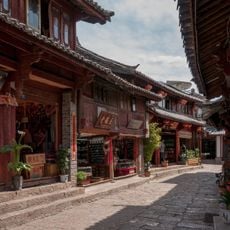
The Guanyin Pavilion is a Buddhist temple in Yongbei featuring traditional Chinese architecture with wooden structures arranged according to classical building methods. The complex includes a central main hall and entry areas that define the layout of the site.
The main hall's founding date is unknown, and it was destroyed repeatedly in wars. The present building was rebuilt in 1876, the second year of the Guangxu reign of the Qing. The Guanyin image on the stone wall was brought from the Central Plains by envoys sent by the Gao family, hereditary prefects of the Dali Kingdom, to obtain Buddhist texts.
The temple honors Guanyin, the goddess of compassion in Buddhist tradition, and serves as a place where devotees come to pray and leave offerings. It remains an active center for religious practice and worship.
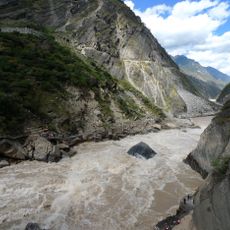
The pavilion sits in Lingyuan Gorge east of Yongbei town, wedged between a cliff to the south and the Lingyuan River to the north. A marble-railed corridor runs outside the hall, and the inner shrine is screened by carved wooden panels. The stone Guanyin image is 1.78 m high and 0.75 m wide, so the hall is compact and visited on foot.
The stone Guanyin image beside the main hall is 1.78 m tall and 0.75 m wide, and its inscription attributes the brushwork to the Tang painter Wu Daozi. The carving reached Yongsheng with envoys sent by the Gao family, hereditary prefects of the Dali Kingdom, to obtain Buddhist texts from central China.
The community of curious travelers
AroundUs brings together thousands of curated places, local tips, and hidden gems, enriched daily by 94,456 contributors worldwide.