Petersberg Citadel, Citadel in Erfurt, Germany
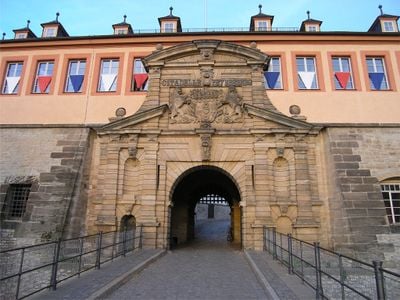
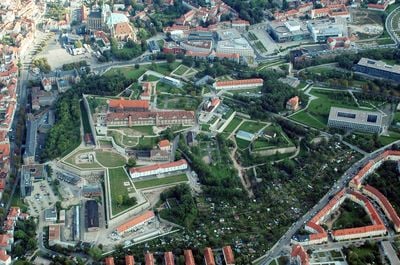
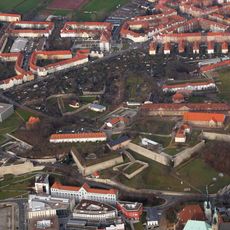
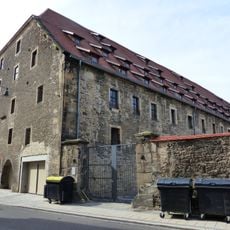
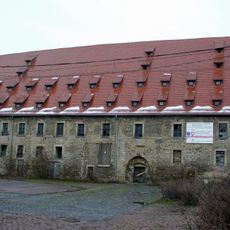
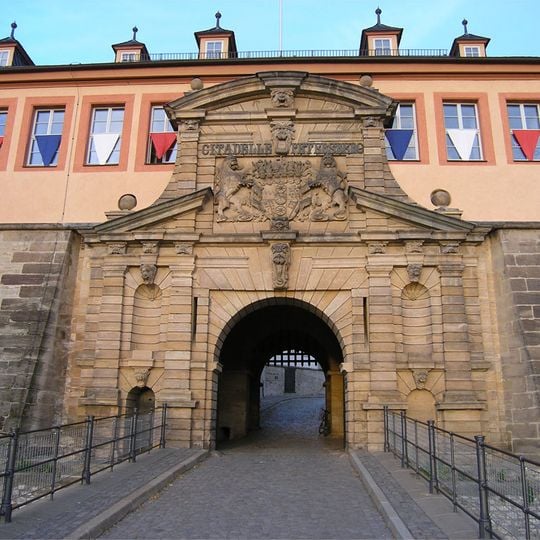
Petersberg Citadel is a star-shaped fortress on a hill in Erfurt, enclosed by earth-and-masonry ramparts with eight bastions and dry moats. Its main gate, the Peterstor, carries a triangular pediment inscribed "CITADELLE PETERSBERG" above a relief of two lions flanking a coat of arms. Inside the walls stand long barracks buildings with red tiled roofs and cream facades, and the 12th-century Peterskirche.
Johann Philipp von Schönborn, Archbishop-Elector of Mainz, ordered the citadel built after his 1664 conquest of Erfurt; its foundation stone was laid on 1 June 1665 under the name Citadelle Johann Philippsburg. French troops occupied it from 1806 to 1814, and after the Congress of Vienna it passed to Prussia in 1815. It remained in military use until 1963, when parts of the site opened to the public.
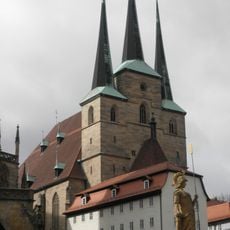
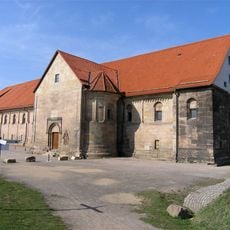
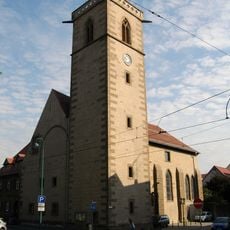
The oldest surviving building inside the walls is the Peterskirche, the church of the Benedictine monastery of St Peter and Paul recorded from 1060 and rebuilt between 1103 and 1147. In 1184 a floor of the monastery building collapsed into the latrine during a meeting of nobles, and at least 60 of them drowned. The hill and later the citadel take their name from this monastery.
The citadel covers 36 hectares within over two kilometres of walls, so allow time to cross between the Peterstor gate and the far bastions. The underground listening passages and the 1832 bakery are shown on guided tours only. Parts of the site have been open to the public since 1963.
The walls contain listening passages, called Horchgänge, where soldiers patrolled to detect enemy miners during a siege. The fortress bakery of 1832 is again in working order, and the underground passages are open to visitors.
The community of curious travelers
AroundUs brings together thousands of curated places, local tips, and hidden gems, enriched daily by 93,941 contributors worldwide.