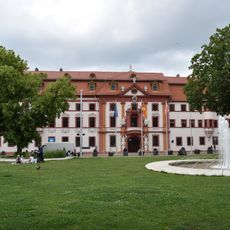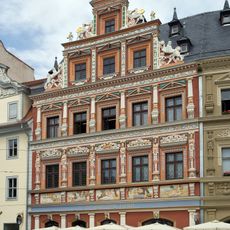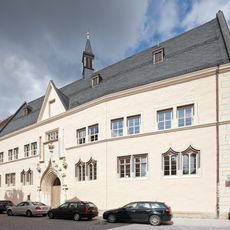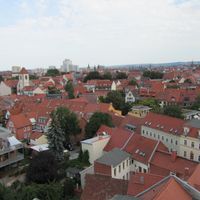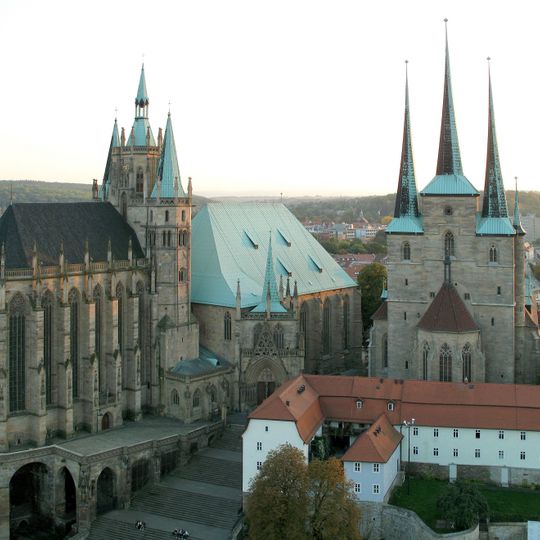
Erfurt, State capital in Thuringia, Germany
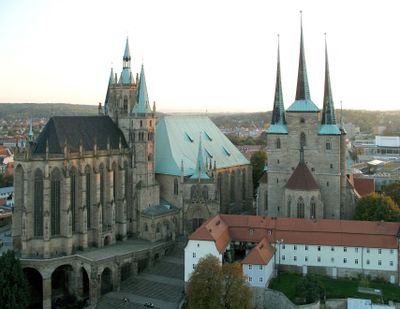
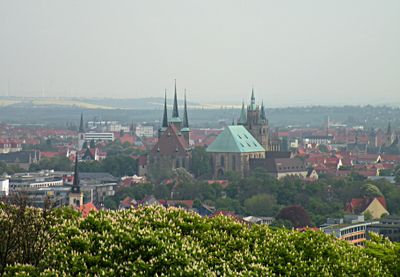
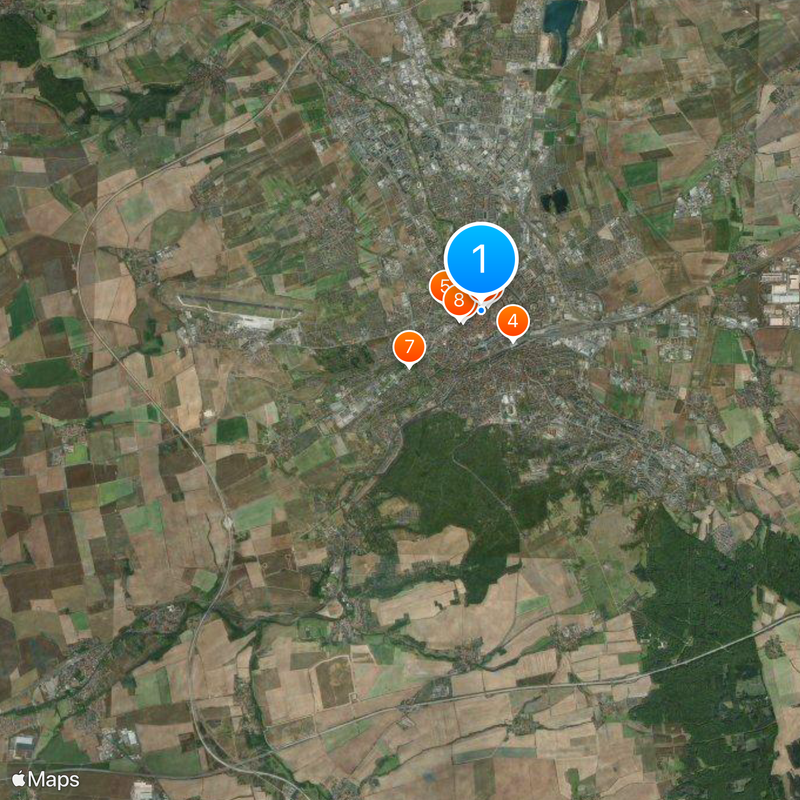
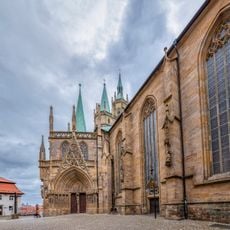
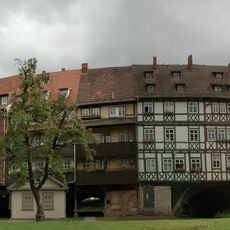
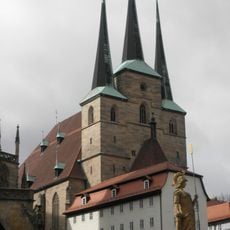
Erfurt is the state capital of Thuringia and sits in central Germany, roughly halfway between Frankfurt and Leipzig. The old town spreads over gentle hills along the Gera River and includes several Gothic churches, narrow lanes, and the inhabited Merchants' Bridge that crosses the water in a single arched span.
The city was founded in 742 and grew into a trading hub during the Middle Ages because several merchant routes passed through its territory. Later, it became a center of the Reformation after Martin Luther studied and lived in its Augustinian monastery.
Students shape the daily rhythm around the old town, filling cafés and bookshops in the narrow lanes near the university buildings. On weekends, locals gather at the cathedral square for markets and outdoor concerts that reflect the city's lively community life.
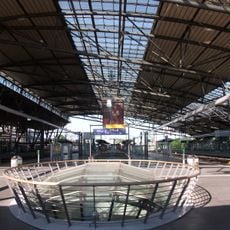
The main train station lies just south of the center and connects the city to most major German cities through fast trains. Trams run through the inner city and reach residential areas and the airport, though most sights are within walking distance once you arrive.
The Merchants' Bridge is the longest continuously inhabited bridge in Europe and holds 32 residential buildings from the 16th century along its entire length. Walking across it, many visitors do not immediately realize they are on a bridge because the tightly packed houses block the view of the water below.
The community of curious travelers
AroundUs brings together thousands of curated places, local tips, and hidden gems, enriched daily by 60,000 contributors worldwide.