St. Bartholomew's Church, Berchtesgaden, Catholic pilgrimage church on Königssee Lake, Germany
St. Bartholomä is a Roman Catholic pilgrimage church on the Hirschau peninsula, on the western shore of Königssee. Rebuilt from 1697 on the foundations of a 12th-century chapel, it has two different onion domes and three red domed roofs over a three-apse choir; its ground plan follows Salzburg Cathedral. The apses hold altars to St. Bartholomew, St. Catherine and St. James, with stucco by Salzburg artist Josef Schmidt.
Kuno von Horburg, half-brother of Berengar I of Sulzbach, had a stone chapel built here, consecrated on 24 August 1134 by Bishop Roman I of Gurk as Basilica Chunigesee. It was demolished in 1697–98 and rebuilt as a domed structure on the old foundations; in 1733 Prince-Provost Cajetan Anton Notthafft gave church and lodge their Baroque form. King Ludwig II saved the dilapidated church from demolition and had it restored, reconsecrated on 25 July 1868.
The church is named after Saint Bartholomew, patron of alpine farmers and dairymen, which is why the three apses hold altars to Bartholomew, Catherine and James. Each year on the Saturday after 24 August, the Almer Wallfahrt, held to be the oldest mountain pilgrimage in Europe, arrives from Maria Alm in Austria.
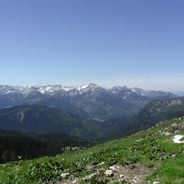
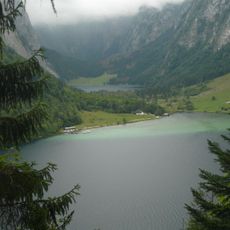
The church stands on the Hirschau peninsula on the western shore of the Königssee and can be reached only by ship or after a long hike across the surrounding mountains. The Archenkanzel, a viewpoint 743 metres above the lake, offers a view down to the church.
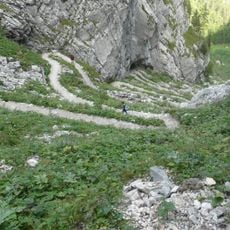
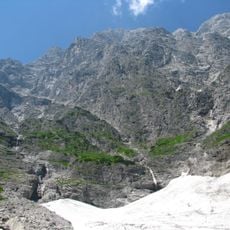
An annual pilgrimage route starts from Maria Alm in Austria and crosses the Berchtesgaden Alps to reach the church, with walkers arriving on the Saturday after August 24. This multi-day journey represents one of the oldest still-practiced pilgrim walks in the region.
The community of curious travelers
AroundUs brings together thousands of curated places, local tips, and hidden gems, enriched daily by 93,745 contributors worldwide.