Fulda Cathedral, Cathedral in Fulda, Germany.
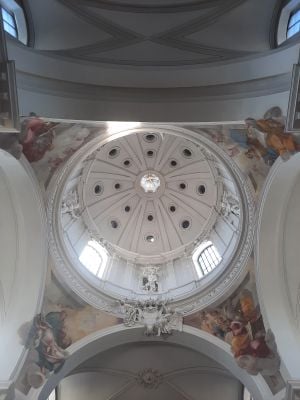
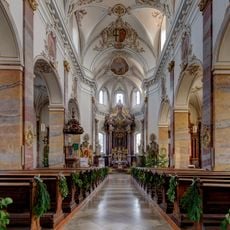
Fulda Cathedral is a three-aisled Baroque basilica with two 65-metre towers flanking its east front, which faces the cathedral square; the choir lies at the west end. The crossing is topped by a 39-metre dome, and the nave runs 99 metres. The white interior draws on St. Peter's and St. John Lateran in Rome.
The present structure was begun in 1704, designed by architect Johann Dientzenhofer and built over the foundations of an earlier church from the 8th century. This transformation reflected the architectural trends of the baroque period in central Germany.
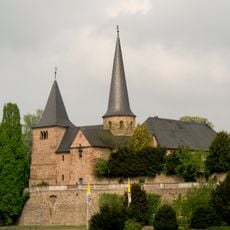
The cathedral is the burial church of Saint Boniface, whose tomb lies in the crypt beneath the high choir, and it is the goal of the Bonifatiuswallfahrt pilgrimage. The dedication tablet on the facade, set by Prince-Abbot Adalbert von Schleifras, names only Christus Salvator as the church's title. The sandstone figures on the towers show Sturm as abbot and Boniface as bishop with a dagger-pierced Bible.
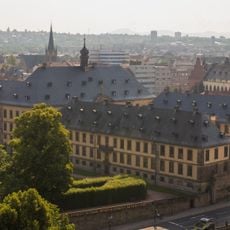
The main facade with the two 65-metre towers faces the Domplatz on the east side, while the choir and the Boniface crypt lie at the west end, so enter from the square and walk the nave westward. The cathedral is the centre of Fulda's baroque quarter and stands next to the former monastery buildings, with the Lady Chapel and sacristy adjoining them.
The cathedral faces west rather than east, which is unusual for churches of this type and era. This orientation becomes apparent when walking around the building and understanding its placement within the city.
The community of curious travelers
AroundUs brings together thousands of curated places, local tips, and hidden gems, enriched daily by 94,154 contributors worldwide.