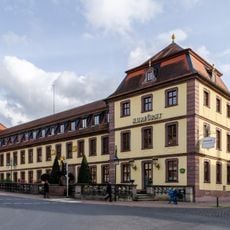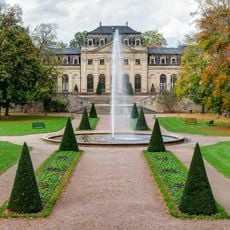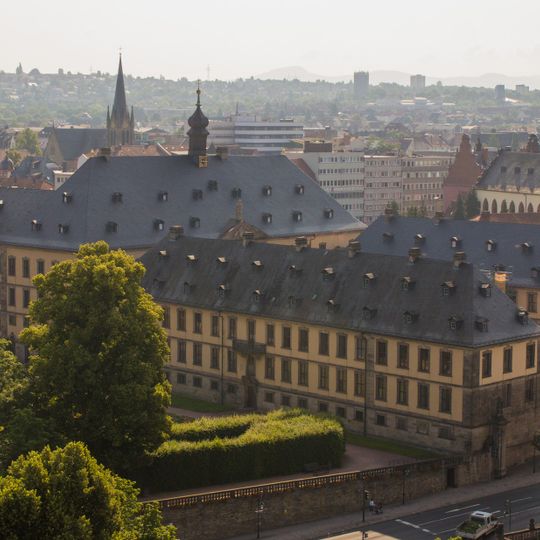
Fulda City Palace, Royal palace and museum in Fulda, Germany.
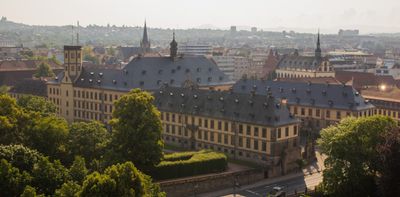
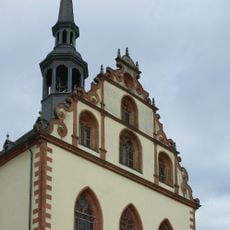
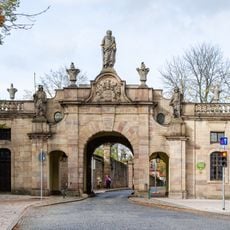
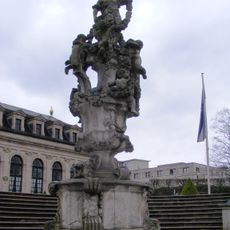
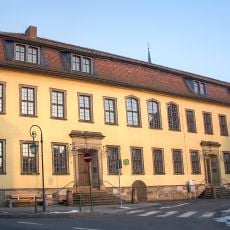
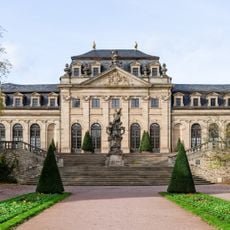
Fulda City Palace is a baroque residence with ornate decorations, grand halls, and elaborately designed ceilings created by architect Johann Dientzenhofer. The building features interconnected wings that form a spacious complex designed for princely residence and administrative functions.
A castle existed on the site by the early 14th century, first mentioned as the "new castle" under Abbot Heinrich V of Weilnau. It was rebuilt as a four-winged Renaissance palace between 1607 and 1612. From 1706 Prince-Abbot Adalbert I von Schleifras commissioned Johann Dientzenhofer to rebuild it in Baroque style; the foundation stone was laid on 26 March 1708, and work was largely finished by 1714, with interiors completed by 1719.
The palace is now Fulda's town hall, and its Baroque state rooms, including the mirror hall and the Princes' Hall, are open as a museum. The building passed to the princes of Orange-Nassau and the electors of Hesse after secularisation in the early 19th century.
The palace stands between the cathedral and the town centre, its Ehrenhof courtyard opening toward the city. The Baroque state rooms and mirror halls are shown as a museum; the administrative wings serve as Fulda's town hall and are not open to visitors. Allow time to walk the courtyard and look up at the tower with its onion-shaped cupola.
The palace originally served as the residence of the prince-bishops, demonstrating the religious power structure of the region during the early modern period. This transformation from spiritual authority to administrative power is visible in the building's design and purpose.
The community of curious travelers
AroundUs brings together thousands of curated places, local tips, and hidden gems, enriched daily by 94,063 contributors worldwide.