Weingarten Abbey, Benedictine monastery in Weingarten, Germany
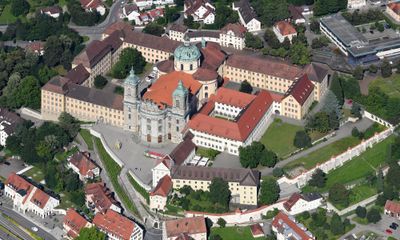
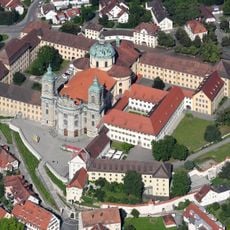
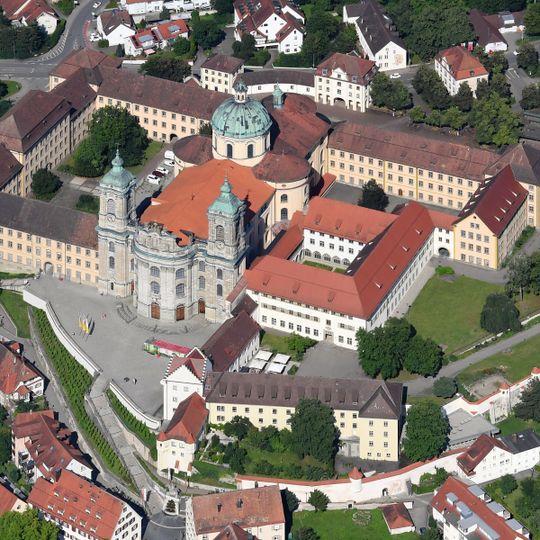
Weingarten Abbey is a Benedictine monastery on the Martinsberg in Weingarten, Baden-Württemberg. Its church, St. Martin's Basilica, was built between 1715 and 1724 to designs by Franz Beer, replacing a Romanesque predecessor. The church has a pale stone facade, two towers with green domed caps, and a large green dome over the crossing. Red-tiled wings enclose rectangular courtyards; part of the complex now houses the Pädagogische Hochschule Weingarten and the Academy of the Diocese of Rottenburg-Stuttgart.
Welf IV founded a Benedictine monastery on the Martinsberg in 1056, settled by monks from Altomünster; the earlier convent at Altdorf had burned in 1053. In 1274 the abbey was raised to the status of Reichsabtei, independent of all lordship except the emperor, confirmed by King Rudolf of Habsburg. The Romanesque church of 1124–1182 was largely demolished from 1715 and replaced by Franz Beer's Baroque church, completed in 1724.
The abbey's monks care for the Blutritt, the horseback pilgrimage to the Reliquary of the Holy Blood, a relic said to contain earth from Golgotha soaked with Christ's blood, donated in 1090 by Judith of Flanders. The monastery follows both the Roman and Byzantine rites.
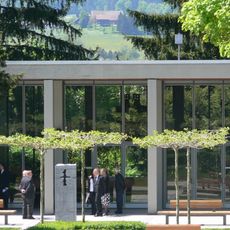
Visitors should know that parts of the grounds are used by the university, so access to some areas may be limited. It is worth checking opening hours in advance and heading for the church as the main destination.
The Gabler organ in the church was built between 1735 and 1750 by Joseph Gabler and has over 60 registers, 169 ranks and more than 6,600 pipes. The 102-metre-long church is called the "Swabian St. Peter's" because it is almost exactly half the size of St. Peter's Basilica in Rome.
The community of curious travelers
AroundUs brings together thousands of curated places, local tips, and hidden gems, enriched daily by 92,889 contributors worldwide.