Haslachburg, Medieval castle in Ravensburg, Germany
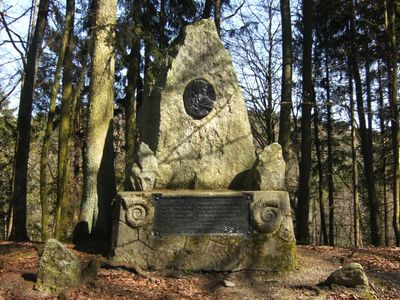
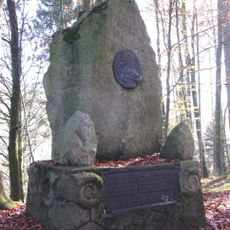
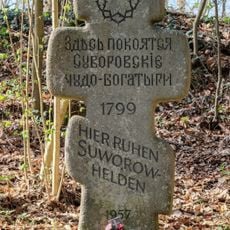
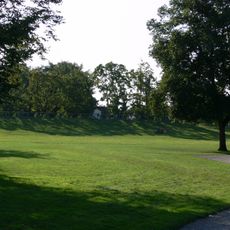
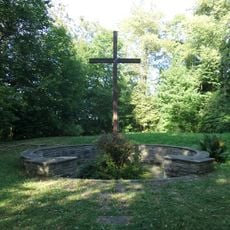
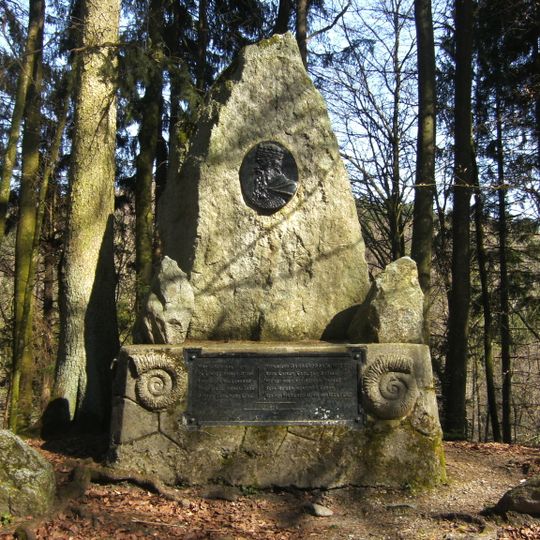
Haslachburg is a vanished hill castle site on the steep western slope of the Lauratal valley between Weingarten and Albisreute, in the municipality of Ravensburg. Nothing of the walls or towers remains; only the former rampart can still be made out, and the Barbarossastein now stands at the spot.
The Haslachburg was a hill castle on the steep western side of the Lauratal valley, opposite Burg Wildeneck, in the forest called Haslach. It was a Welf possession; in 1187 Frederick Barbarossa is documented as staying there with his son Conrad, though the castle was still Welf-held then. It was supposedly demolished completely in 1748, and its stone was used to build the parish church in Altdorf.
The vanished castle lives on in local legends: the tale of the Haslachburg and the bell casting at Weingarten, and the Laura saga, whose heroine is said to have lived here. The Barbarossastein now stands at the former site, and the name Haslach refers to the nearby Haslach wood.
The site lies on the steep western slope of the Lauratal valley between Weingarten and Albisreute, below Zundelbach, in the Haslach wood. Nothing of the castle stands; only the former rampart can be made out, and the Barbarossastein marks the spot. Approach on foot and expect uneven, sloping ground.
The castle is linked to the legend of Laura, a maiden said to have lived here; the tale of a knight's love, a burning neighbouring castle and her death by a stone in the valley is told in variants, one of them about a "wild knight". Only the former rampart remains visible on the slope above the Lauratal.
The community of curious travelers
AroundUs brings together thousands of curated places, local tips, and hidden gems, enriched daily by 93,971 contributors worldwide.