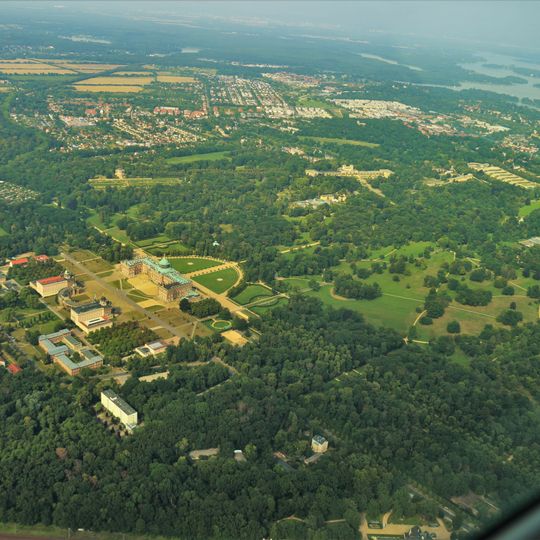
Palaces and Parks of Potsdam and Berlin, UNESCO World Heritage Site in Potsdam and Berlin, Germany.
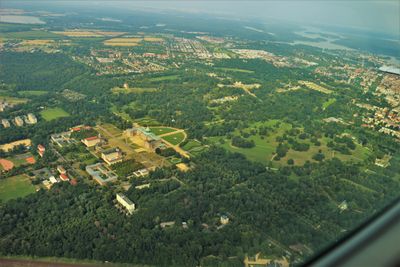
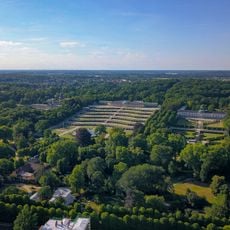
The Palaces and Parks of Potsdam and Berlin is a UNESCO World Heritage Site of palace complexes and landscaped gardens in the Havelland region around Potsdam and Berlin, covering 2,064 hectares. It began with 500 hectares and 150 construction projects from 1730 to 1916, extended in 1992 and 1999. In the photograph, a long pale-yellow palace with a green roof stands on a terraced slope above geometric gardens with curved paths and lawns, with tree-lined avenues cutting through dense woods.
These landscapes developed between 1730 and 1916, when Prussian kings built their castles and gardens there following European models. After World War II, the grounds were divided until reunification in 1990 allowed restoration and UNESCO recognition.
The site's name comes from Sanssouci, Frederick the Great's summer palace, whose French phrase means "without a care". The ensemble also holds the Alexandrowka colony, log houses built from 1826 for Russian singers of the First Prussian Regiment, and the Belvedere on the Pfingstberg, a lookout begun in 1847. The 1999 extension added the Lindenallee west of the Neues Palais and the former Kaiserbahnhof.
Plan several days to visit the different palaces and their gardens, as they are spread across large areas. You can walk or use local transportation to move between sites and explore the landscape in between.
Many visitors don't know that the Neue Garten in Potsdam was one of the major English garden experiments of the 18th century. This park shows a completely different design philosophy from the baroque layouts and reveals changing tastes of the Prussian elite.
The community of curious travelers
AroundUs brings together thousands of curated places, local tips, and hidden gems, enriched daily by 94,299 contributors worldwide.