Wesel–Datteln Canal, Navigation canal in North Rhine-Westphalia, Germany
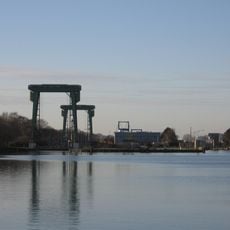
The Wesel-Datteln Canal runs 60 km through North Rhine-Westphalia, parallel to the Lippe River, from the Rhine at Wesel to the Dortmund-Ems Canal at Datteln. Its six lock groups—Friedrichsfeld, Hünxe, Dorsten, Flaesheim, Ahsen and Datteln—raise or lower vessels by up to 44 m. The locks are notable for the tall portals of their lifting gates.
Construction began in 1915 but halted in 1916 and restarted in 1924, finishing in 1930. This waterway became an important trade link between the Rhine and the northern industrial region.
The canal's nickname, Lippe-Seitenkanal, survives from its planning era, when it was routed alongside the Lippe. Near Dorsten the river itself was moved about 500 m north to make room for the channel. The six lock groups are named after their sites: Friedrichsfeld, Hünxe, Dorsten, Flaesheim, Ahsen and Datteln.
The canal is a federal waterway for inland shipping, so pleasure craft share it with large motor freighters and pushed convoys of class Vb. The towpaths along the Lippe side are used by walkers and cyclists; the six lock groups at Friedrichsfeld, Hünxe, Dorsten, Flaesheim, Ahsen and Datteln are the best spots to watch locking.
At the Friedrichsfeld lock alone, more than 20,000 ships are counted each year. In 2003 the canal carried 17.5 million tonnes of goods across about 23,400 lockings, and the Marl harbours at the Chemiepark Marl and Zeche Auguste Victoria/Blumenthal handle roughly 4 million tonnes a year, the largest turnover on the waterway.
The community of curious travelers
AroundUs brings together thousands of curated places, local tips, and hidden gems, enriched daily by 94,129 contributors worldwide.