Blücherdenkmal, Bronze monument at University Square, Rostock, Germany.
The Blücherdenkmal is a bronze statue on University Square in Rostock showing a Prussian field marshal in military uniform with a flowing coat, holding a marshal's baton and sword. The pedestal is decorated with bronze reliefs and inscriptions that frame the sculptural composition.
A newspaper report of July 1814 claiming Rostock planned a monument to its native son turned out to be invented, but the public pressure led the city to commission Johann Gottfried Schadow. The statue was cast in Berlin and the granite base made in Schwerin; it was unveiled on 26 August 1819, the anniversary of the Battle of the Katzbach. Blücher, ill, died two weeks later.
The pedestal displays bronze reliefs showing the Battles of Ligny and Waterloo along with verses by Johann Wolfgang von Goethe. Visitors can observe how artists translated military events into visual narratives for public remembrance.
The statue stands at the edge of University Square, not in its centre, and since 1938 faces northeast; it was turned when it was moved a few metres. The protective fence was removed at the same time, so visitors can approach the pedestal directly and read the bronze reliefs on all four sides.
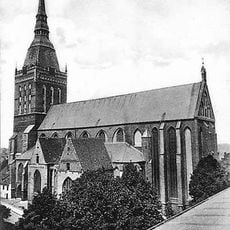
The monument was moved a few metres and turned in 1938: it originally faced south-east toward Blücher's birthplace at Blücherstraße 22, today Rungestraße 19. In late 1942 the statue was taken down and walled up inside St. Mary's Church to protect it from bombing. When the Red Army occupied Rostock in April 1945, library director Bruno Claußen persuaded the commander to spare it by recalling that Blücher had been a comrade-in-arms of the Russians.
The community of curious travelers
AroundUs brings together thousands of curated places, local tips, and hidden gems, enriched daily by 92,947 contributors worldwide.