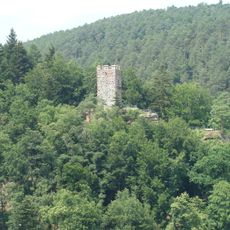
Breitenstein Castle, Rock castle in Elmstein Valley, Germany
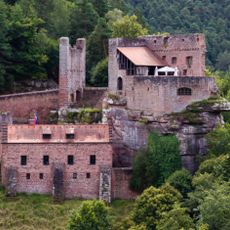
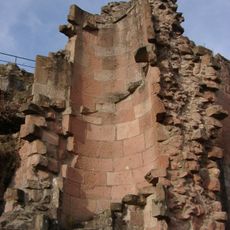
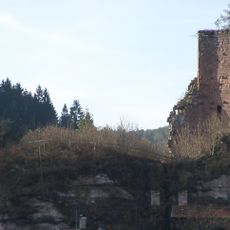
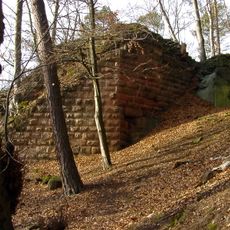
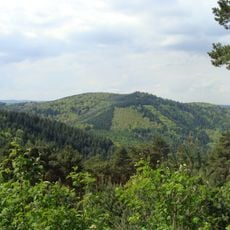
Breitenstein Castle is a ruined rock castle on a narrow crag 220 metres above the Speyerbach valley. Its shield wall of rusticated ashlars survives almost to full height, with a sloping right edge seen from the hill side and Gothic corbels on the inner walkway. Behind it are the partial walls of a modest dwelling, reached by a rock-cut staircase on the south side.
Construction began in 1246 under Pope Innocent IV as a response to conflicts with Emperor Frederick II. The fortress played a role in medieval power struggles between papal and imperial interests in the region.
The name Breitenstein first appears in 1257 with a knight of Kropsberg, castellan of the Breitenstein; by 1265 the knight called himself Burkhard of Breitenstein. The 1357 Burgfrieden treaty renamed the parts: the larger siege castle became the main castle and the older complex the outer ward. Visitors can still see the corbels of the wall-walk, which already show Gothic forms.
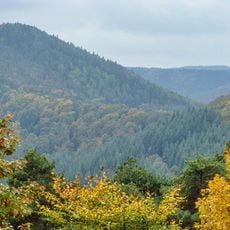
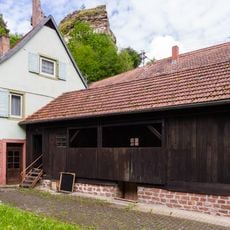
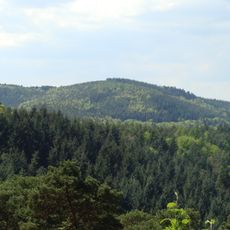
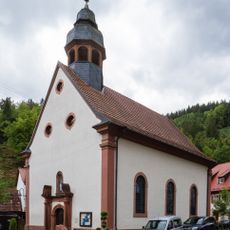
The ruins sit above the hamlet of Breitenstein, part of Esthal, on a slope above the Speyerbach valley; the L499 runs along the valley floor and branches off the B39 at Frankeneck. The core castle stands on a narrow rock base reachable today only by experienced climbers, so the shield wall and neck ditch are best viewed from below.
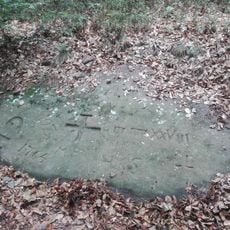
Rather than a traditional moat, access was engineered through stairs carved into the rock itself. This unusual design shows how builders used the natural geology to create defensive advantages.
The community of curious travelers
AroundUs brings together thousands of curated places, local tips, and hidden gems, enriched daily by 92,619 contributors worldwide.