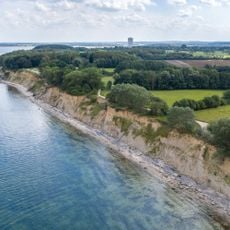
Burg Gosevelde, castle
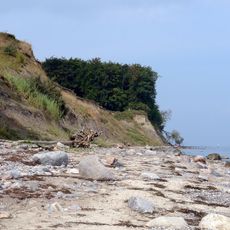
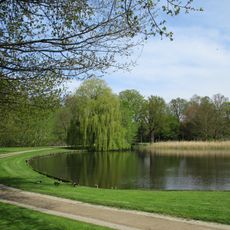
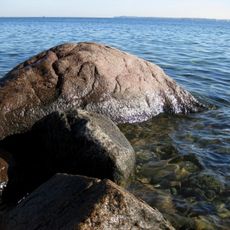
Burg Gosevelde, also called Burg Gosefeld or Räuberkuhle, is a vanished motte castle on a steep geest ridge by the Hemmelsdorfer See, south of Niendorf and west of Häven. Its tower mound measured 12 to 14 m across and was probably built of wood on a stone foundation. A roughly 4 m wide moat and the lake protected it; today the mound with some boulders and the ditch remain.
Burg Gosevelde was first documented in 1255, when Counts Johann I and Gerhard I of Holstein allied against Detlev von Buchwald, his brothers and Otto von Padelügge, who endangered the highways from the castle. It belonged to the Holstein knights von Buchwaldt and existed through the 13th and 14th centuries. The site is now a protected Bodendenkmal.
The site carries the folk name Räuberkuhle, which comes from old stories about robbers and adventurers who may have hidden in this area long ago. This name reflects how the place held meaning in local memory, even though today only the earthwork and scattered stones remain as evidence.
The site is freely accessible and costs nothing to visit, with free parking available near Niendorf or Timmendorfer Strand. The entire earthwork can be walked around easily, and the best time to explore is during spring or summer when the paths are dry and the surroundings are green.
The name Gosevelde comes from the nearby Aalbeck stream and shows how the castle was positioned at a strategically valuable location with natural water and forest protection. The folk name Räuberkuhle preserves local legends about robbers, keeping alive stories that may or may not be based on real events.
The community of curious travelers
AroundUs brings together thousands of curated places, local tips, and hidden gems, enriched daily by 92,892 contributors worldwide.