Rohsee, Archaeological lake in Frankfurt, Germany
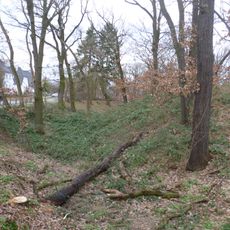
Rohsee is an elongated body of water in Frankfurt's city forest that stretches from southwest to northeast. The lake gradually transitions into swamp areas and is lined with black alder stands that create a distinctive woodland environment.
The lake is a former arm of the Main; its southern shore was settled in the Bronze Age, shown by 1973 digs of the Schwanheim heritage society that found pottery, a grinding stone and part of a clay spoon, plus timber and stone bank reinforcements. A stone-lined Roman well a few metres west, dated to the 2nd/3rd century AD, held over 2,000 vessel fragments, a denarius and a tile stamped by Legio XXII Primigenia; its main find was the skeleton of a young man killed by a sword blow to the head.
The lake has been a protected nature reserve since 2003 and provides habitat for specialized plant and animal species. The black alder stands shape the landscape and show how natural habitats are preserved near the city.
The Rohsee lies at the northwestern edge of the Frankfurt city forest in Schwanheim, reached via the Rohseeweg path that runs a few metres from its western bank. Water levels swing with the groundwater and the pond can dry out almost completely, so the shoreline and the boundary with the Riedwiese marsh shift from year to year. Since 2003 the surrounding woodland has been an EU Fauna-Flora-Habitat area.
When water levels drop, the elevated root systems of ancient black alders become visible, having regenerated over centuries through periodic logging. This visibility offers a rare glimpse into the long-standing relationship between human use and natural recovery.
The community of curious travelers
AroundUs brings together thousands of curated places, local tips, and hidden gems, enriched daily by 93,899 contributors worldwide.