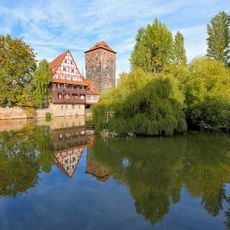
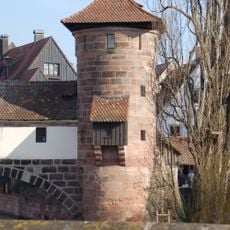
Schlayerturm, Medieval fortified tower in Nürnberg, Germany.
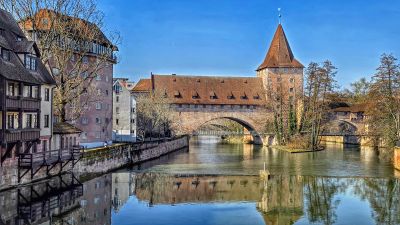
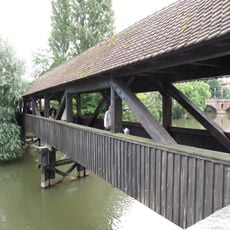
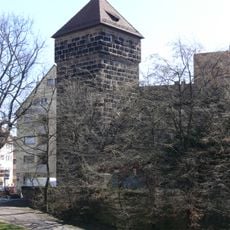
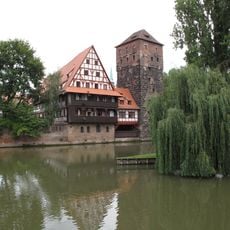
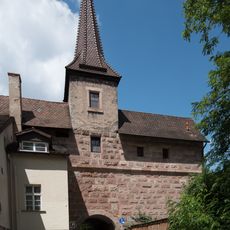
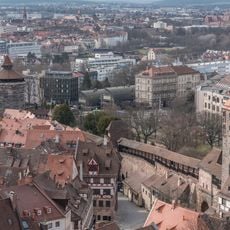
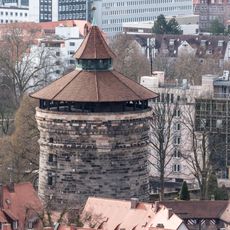
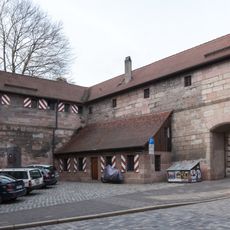
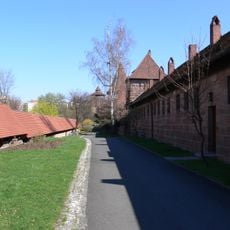
The Schlayerturm is a square tower of sandstone ashlar with a pointed, eight-sided tent roof, built 1419–1422 and standing on a small island in the outflow of the Pegnitz. To its south the Fronveste bridges the southern arm of the river; to the north a massive sandstone-covered walkway with a gabled roof, built at the end of the 15th century, links it to the Hallertürlein over the northern arm.
The tower was built between 1419 and 1422 as part of Nuremberg's final fortification system. It originally bore the name 'Grünes F' and marked a turning point in the city's defensive strategy.
The tower was long part of the city's everyday landscape and appears in artworks by Albrecht Dürer. Its riverside location shaped how Nuremberg residents understood their defense system and their relationship with the waterway.
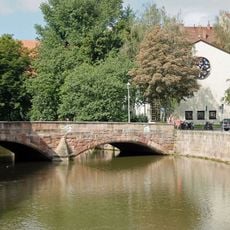
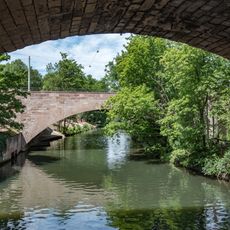
The tower stands mid-stream in the Pegnitz outflow, on a small river island; the Fronveste adjoins it to the south and a sandstone walkway with a pitched roof, built at the end of the 15th century, links it north to the Hallertürlein. The best view of the tower, the city wall and the Hallertürlein together is from the nearby Maxbrücke.
The tower carries the old designation "Grünes F", a name whose origin the sources do not explain. In 1519 weaknesses were found in its foundation, and the tower's height was reduced in response. During the Second World War it was heavily damaged; the rebuild restored the original height using period images.
The community of curious travelers
AroundUs brings together thousands of curated places, local tips, and hidden gems, enriched daily by 93,466 contributors worldwide.