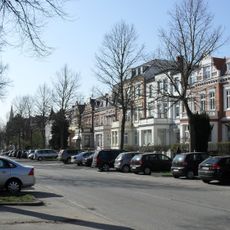
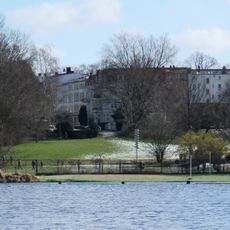
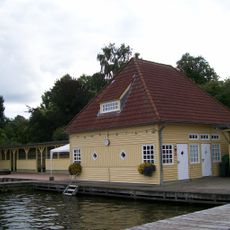
Schulgarten Lübeck, Botanical garden in St. Jürgen, Lübeck, Germany
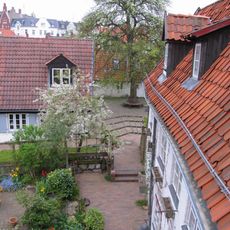
Schulgarten Lübeck is a public botanical garden in the St. Jürgen district, on the Falkenwiese between the Wakenitz open-air pool and the sports grounds on the river's western bank. Its 8,000 square metres hold around 2,000 plant species, arranged clockwise from the main entrance into areas such as a water-lily basin, a farm garden, an alpine garden, a sunken garden framed by arbours and pergolas, and a tunnel of clipped lime trees.
Erwin Barth, Lübeck's city gardener, drew up the first plans for a school garden in 1909. His successor Harry Maasz laid out a nursery garden on the site in 1914, and in 1930 garden inspector Rudolf Engehausen established the Schulgarten there. During the Second World War the grounds were used to grow potatoes and vegetables, and in 1950 the garden reopened as a teaching and school garden.
The garden serves as a teaching place where visitors encounter different plant species and their natural habitats firsthand. Schools and individuals use the space to learn about nature through direct observation.
The garden lies in St. Jürgen on the Falkenwiese, between the Falkenwiese open-air pool on the Wakenitz bank and the sports grounds on the river's low western strip. Entry is free, and the main entrance leads clockwise past the lily basin, farm garden and sunken garden. A reed-roofed wooden house stores tools, and a glasshouse by Falkenstraße shelters palms in winter.
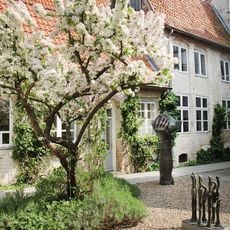
At the end of the tunnel of clipped lime trees stands a fountain figure from 1919/1920 by Ernst Müller-Braunschweig, a girl drawing water, which Lübeckers call "Dorothea". In the farm garden is Fritz Behn's 1934 panther, bought by the city in 1960 and moved here from Eschenburgpark.
The community of curious travelers
AroundUs brings together thousands of curated places, local tips, and hidden gems, enriched daily by 94,418 contributors worldwide.