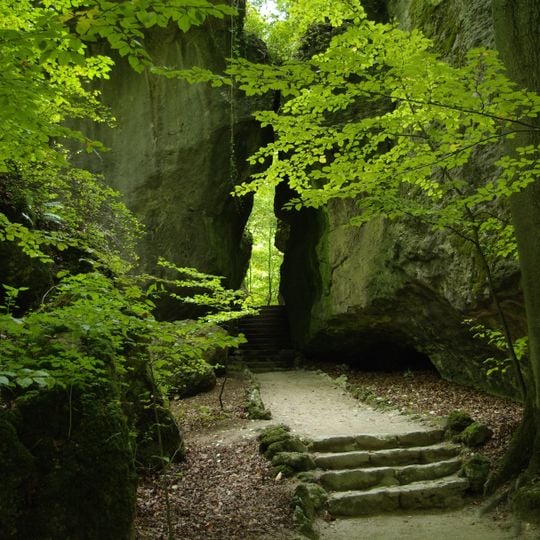
Felsengarten Sanspareil, Rock garden and English landscape in Wonsees, Germany
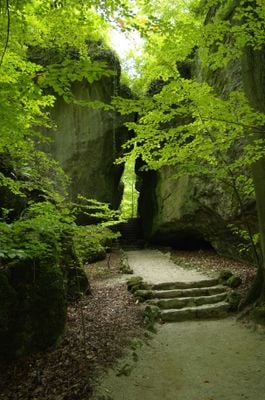
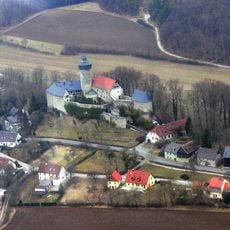
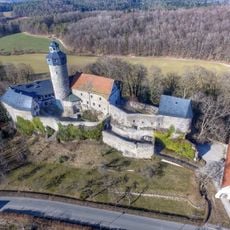
Felsengarten Sanspareil is a 13-hectare English landscape garden laid out from 1744 to 1748 in Wonsees, in the Franconian Jura. Its 39 limestone outcrops, some with natural grottos or caves and others so close together that they leave only crevice-like passages, are linked by 17.5 kilometres of footpaths along a strip about 800 metres long. The medieval Zwernitz Castle stands above the entrance.
Work began in spring 1744 on plans by garden architect Joseph Saint-Pierre for Margrave Frederick of Bayreuth; Margravine Wilhelmine moved into Zwernitz Castle that April and shaped the garden around Fénelon's novel Télémaque. The village and grove were renamed Sanspareil in 1746, and the permanent buildings were finished by 1748. After 1810 the garden decayed; lightning toppled the Aeolus temple in 1830, and many buildings were demolished by 1839.
The garden's programme follows Fénelon's 1694–1696 novel Les Aventures de Télémaque, translated into German in 1733 as Die seltsamen Begebenheiten des Telemach. More than a dozen mythological scenes from the Telemachy were carved out of the existing limestone rocks, and visitors pass these stations along the winding paths. The village and grove were renamed Sanspareil in 1746, after a guest is said to have exclaimed "C'est sans pareil!"
The garden is accessible year-round with free entry and parking available at the entrance. The paths are sometimes steep and rocky, so sturdy footwear and time to explore at a leisurely pace are recommended.
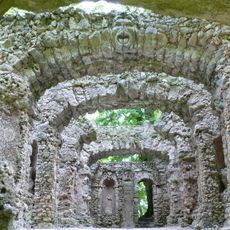
The Ruinentheater, built in 1746, was modelled on the ruined theatre at the Eremitage in Bayreuth. It is still used for summer performances, for which a separate admission is charged. The garden's name comes from a guest's exclamation on seeing the rocks: "C'est sans pareil!"
The community of curious travelers
AroundUs brings together thousands of curated places, local tips, and hidden gems, enriched daily by 94,433 contributors worldwide.