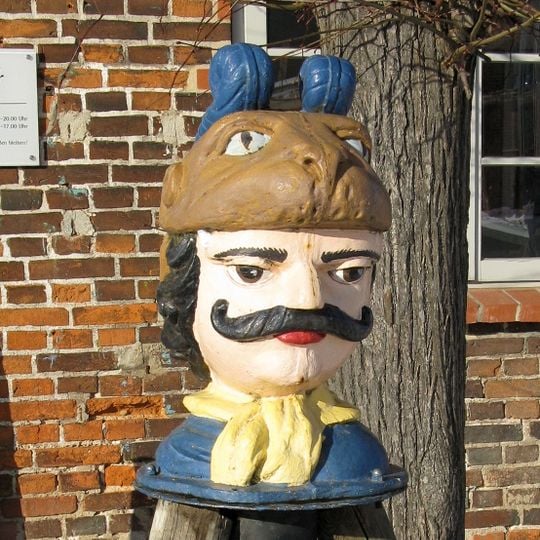
Schwedenkopf, Baroque bust on a dolphin pile in Wismar Bay, Germany
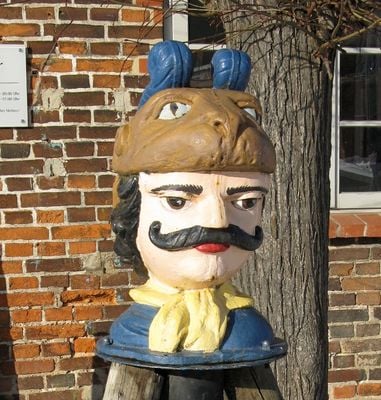
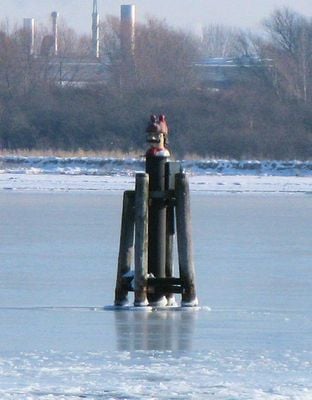
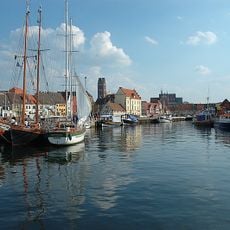
Schwedenkopf is a painted bust of Hercules with a lion-skin cap, mounted on a wooden post in the Wismar Bight off the Wendorf district, marking the entrance to Wismar's harbor. The surviving Baroque original, carved from layered oak, is kept in the city history museum; replicas stand on the harbor piles and elsewhere in the city.
The origin and date of the Schwedenkopf are unknown; the heads were long thought to have stood in the harbour entrance since the 17th century, but they cannot be traced in historical images or travel accounts. In autumn 1902 a Finnish freighter rammed the dolphins carrying them, and in May 1903 an iron foundry mounted cast-iron replicas. The surviving Baroque original, carved from layered oak, is now in Wismar's Stadtgeschichtliches Museum in the Schabbellhaus.
The name "Schwedenkopf" was an everyday term around 1800, though it then described a short haircut seen as modern and enlightened, replacing the old-fashioned braid, as Friedrich Techen noted in 1925. The busts themselves are painted Hercules heads wearing a lion cap, the attribute of Heracles since he slew the Nemean lion.
The two replicas on the dolphins at the harbor entrance are best seen from the Seebrücke in the Wendorf district. The baroque original is kept in the Stadtgeschichtliches Museum in the Schabbellhaus. Two more replicas are held in reserve for the harbor site, and further copies stand around the city.
The original kept in the Schabbellhaus was examined with CT and X-ray scans, which showed it is made of several layers of carved oak. The many nails driven in over time obscured the tree rings, so the wood could not be dated precisely.
The community of curious travelers
AroundUs brings together thousands of curated places, local tips, and hidden gems, enriched daily by 94,384 contributors worldwide.