Geiseltalmuseum, Paleontological museum in Halle (Saale), Germany.
The Geiseltalmuseum is a paleontological collection in Halle dedicated to fossils from the Geiseltal region. It houses approximately 50,000 specimens from the Middle Eocene period, including the remains of vertebrates, invertebrates, and plants that lived millions of years ago.
The Geiseltalmuseum was founded on 23 November 1934 by Johannes Weigelt, then director of the Geological-Paleontological Institute at Martin Luther University Halle-Wittenberg. It was housed in the former chapel built in 1531 by Cardinal Albrecht II of Brandenburg in the north wing of the New Residence. The museum was closed to the public from 2011 to 2018.
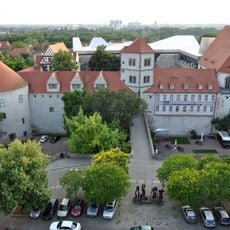
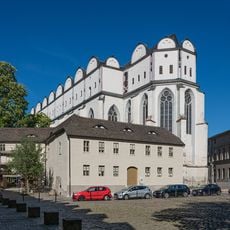
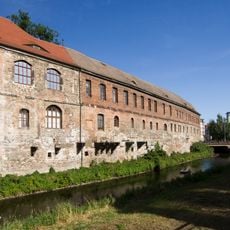
The museum occupies a chapel within the New Residence, a 16th-century building that once served religious purposes. The space today blends its historic setting with the display of ancient natural history, creating an unusual mix of sacred architecture and fossil exploration.
The museum occupies the former chapel built in 1531 by Cardinal Albrecht II of Brandenburg in the north wing of the Neue Residenz, a short walk from Halle's Marktplatz. It closed to visitors from 2011 to 2018; since 2015 university staff have organised guided tours of the collections.
The collection includes rare plant fossils with preserved chlorophyll traces, offering clues about the chemical makeup of vegetation from millions of years ago. Notable specimens also showcase early horses, crocodiles, and beetles whose remains have survived intact from that distant period.
The community of curious travelers
AroundUs brings together thousands of curated places, local tips, and hidden gems, enriched daily by 94,361 contributors worldwide.