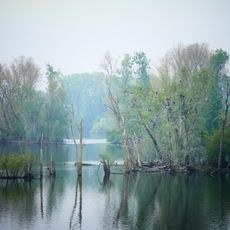
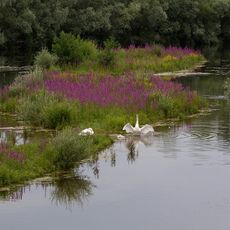
Fürstenberg, Hill summit in Xanten, Germany.
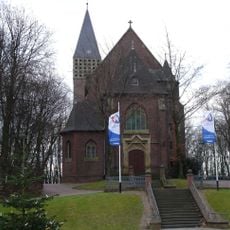
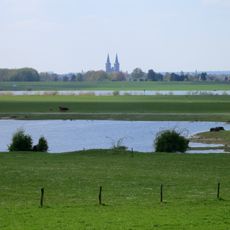
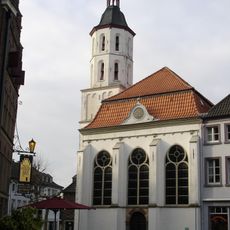
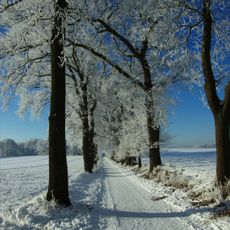
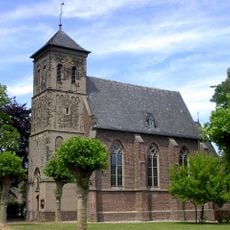
Fürstenberg is a 71.6-metre hill southeast of Xanten, part of a push moraine formed in the Saale glaciation. Its slopes are wooded with beech, oak, ash and sweet chestnut, and hollow ways and dry valleys cut across the ridge. The Kreuzkapelle, built in 1671/1672, is the only surviving structure of the former monastery.
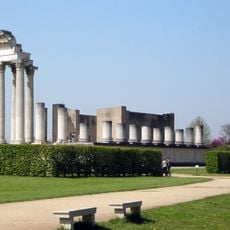
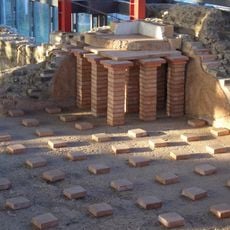
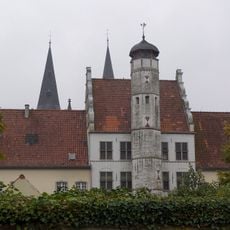
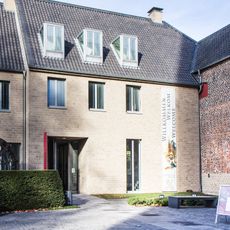
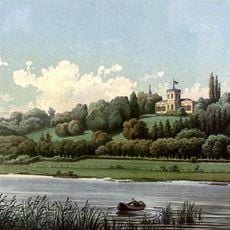
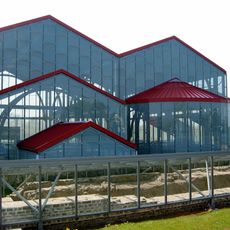
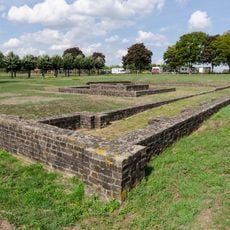
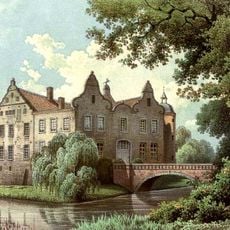
The Roman legionary camp Vetera was built on the southern slope in 13/12 BCE. A monastery later stood on the hill; of it only the Kreuzkapelle, built in 1671/1672, survives. On the site of the old monastery courtyard, Haus Fürstenberg was erected in 1843.
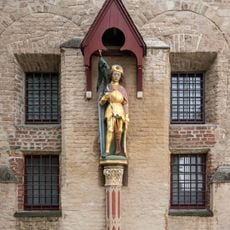
The hill takes its name from the former Fürstenberg monastery, of which only the Kreuzkapelle survives, built in 1671/1672. On the site of the old monastery courtyard, Haus Fürstenberg was erected in 1843. Nearby, the Garten Krautwig occupies 1.5 hectares of a 130-year-old farmstead, with an inner courtyard of myrtle and box, a herb garden and a perennial garden, and lies on the Straße der Gartenkunst between Rhine and Maas.
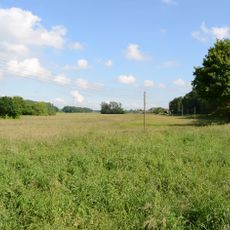
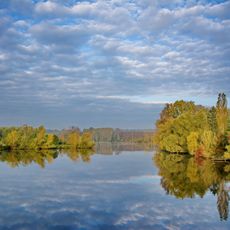
The hill lies southeast of Xanten, with its eastern side dropping as a steep slope toward the Bislicher Insel. Around 47 hectares are protected, so visitors should stay on the marked paths through the beech, oak, ash and sweet chestnut woods. The Garten Krautwig on the hill is open as part of the Straße der Gartenkunst between Rhine and Maas.
The 47-hectare nature reserve on the Fürstenberg shelters green woodpeckers, garden redstarts, nightingales, sparrowhawks and pied flycatchers, along with pond frogs and dwarf bats. The hill is part of a push moraine formed in the Saale glaciation, cut by sunken lanes and dry valleys.
The community of curious travelers
AroundUs brings together thousands of curated places, local tips, and hidden gems, enriched daily by 94,589 contributors worldwide.