Amphitheatre of Xanten, Roman amphitheatre in Archaeological Park of Xanten, Germany
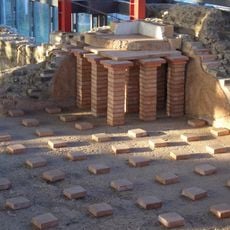
The Amphitheatre of Xanten is a reconstructed Roman arena built upon original foundations and featuring restored seating sections that showcase second-century construction methods. The structure reveals how Romans engineered such large public buildings and organized the space for thousands of spectators.
A wooden amphitheatre on an earth bank was laid out around 100 AD, when the Colonia Ulpia Traiana was founded. Towards the end of the 2nd century it was replaced by a stone building. After the town was destroyed by the Franks in 276 AD, the ruin served locals as a quarry for building material.
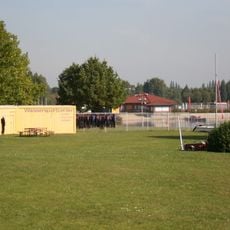
The arena hosts the Xanten Summer Festival, which staged operas, operettas and musicals with international performers until 2012, and open-air rock concerts. At the Roman festival "Schwerter, Brot und Spiele", gladiator fights are directed by a leading historian of gladiature; the 2018 edition drew a record 26,000 visitors.
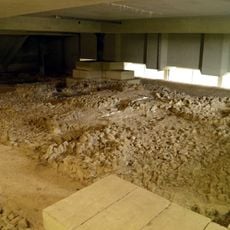
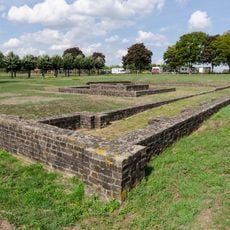
The arena stands in the corner of the easternmost insula of the Roman city, inside today's Archaeological Park Xanten; the surrounding ground was left unbuilt in antiquity to let crowds in. Only a quarter of the seating was rebuilt, on the original ground plan, and the reconstruction was finished in 1981. The foundations exposed in 1935 were moved because weathering had left them unable to carry the new structure.
The 1930s excavations left most of the foundations in place, but three greywacke blocks were set up beside the arena. The surviving masonry was reburied and later served as the base for the partial reconstruction, finished in 1981, which rebuilt a quarter of the original seating on the old ground plan.
The community of curious travelers
AroundUs brings together thousands of curated places, local tips, and hidden gems, enriched daily by 93,689 contributors worldwide.