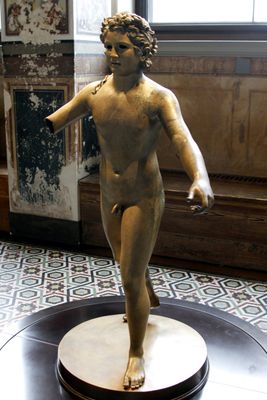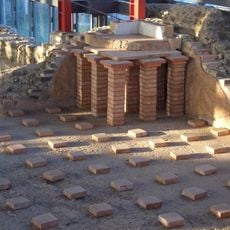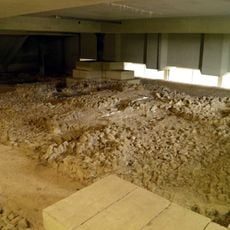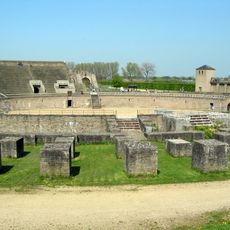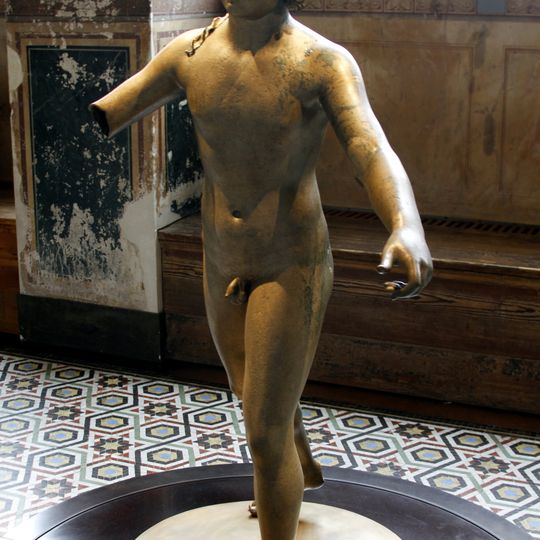
Xantener Knabe, Bronze statue in Neues Museum, Germany
The Xantener Knabe is a Roman-era bronze statue depicting a boy of about twelve, wearing a crown decorated with acorns, grain, grapes, and flowers. The figure is displayed in a museum and shows a carefully worked surface with the dark patina typical of ancient bronzes.
The figure traces back to Greek models from the 2nd century BC and was later used in the Roman Empire. In 1858, fishermen found it by chance in the Rhine when the water level had dropped unusually low.
The figure shows a young servant whose outstretched hands once held a tray for food and drinks at Roman banquets. Bronze figures like this one were placed on the tables of wealthy Romans to show their taste and status.
The statue is on display in a museum where visitors can get close and examine the surface in detail. It is worth walking around the figure, as many of the finer details become visible only when seen from different angles.
The legs of the figure were cast together with the torso in a single pour, which was an advanced technique for the time. The total weight of the bronze comes to around 63 kilograms, making it one of the heaviest ancient bronze finds from the Rhine.
The community of curious travelers
AroundUs brings together thousands of curated places, local tips, and hidden gems, enriched daily by 90,848 contributors worldwide.