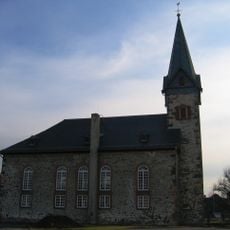
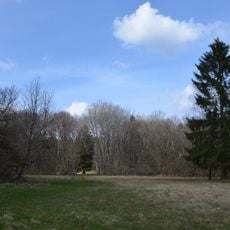
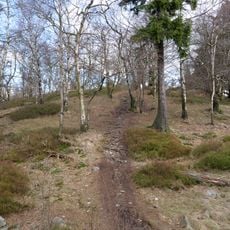
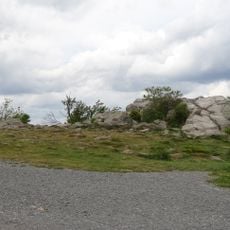
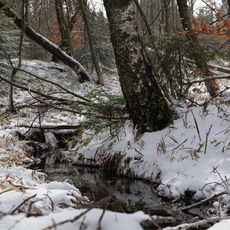
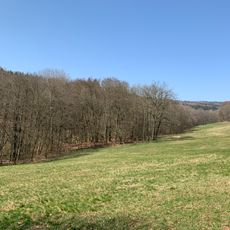
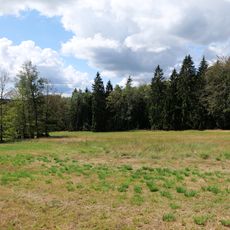
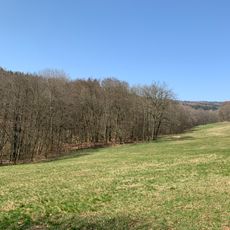
Fuchstanz, Mountain pass in the Taunus, Hesse, Germany
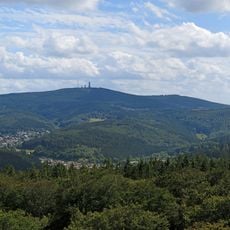
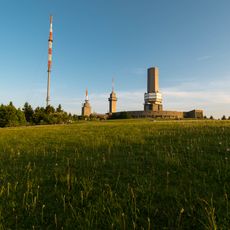
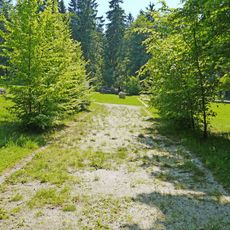
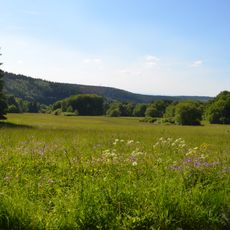
Fuchstanz is a pass at 662 m above sea level in the Taunus, Hesse, between the Kleiner Feldberg and the Altkönig. It is reached only by hiking and forestry paths, with no access road for cars. The pass is wooded today and belongs to land owned by the town of Schwalbach am Taunus.
The pass was used by the Romans from the reign of Vespasian (69–79 AD), who kept forts and vici near the Upper Germanic Limes. After 150 AD a paved road, the Feldbergstraße, ran from Nida (today northwest Frankfurt) to the Kleiner Feldberg fort, the highest on the Limes, crossing the Fuchstanz. The names Pflasterweg and Haderweg recall it. A charcoal kiln stood here in the late 18th century.
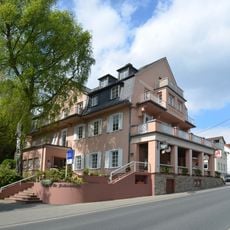
The origin of the name is unknown. Historic postcards show two dancing foxes holding a banner with a poem, and a similar motif appears on a wooden wayside shrine outside the inn. A tale called "Das Märchen vom Fuchstanz" from Helmut Bode's 1953 collection may also be linked to the spot.
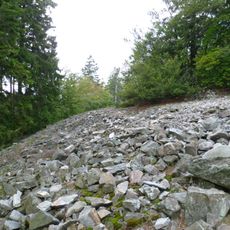
Several marked hiking trails of varying difficulty lead to this mountain pass and make it accessible to most visitors. Information boards along the way explain the geology and natural environment of the area.
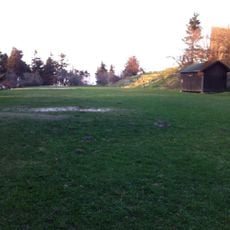
The pass is owned by the town of Schwalbach am Taunus. In 1849 gymnasts under Friedrich August Ravenstein moved their Feldbergfest here from the Großer Feldberg to escape political persecution and a ban on events by Elector Friedrich Wilhelm I of Hesse-Kassel; the pass was then largely treeless, giving a wide view.
The community of curious travelers
AroundUs brings together thousands of curated places, local tips, and hidden gems, enriched daily by 93,519 contributors worldwide.