Schloss Hämelschenburg, Moated castle in Emmerthal, Germany
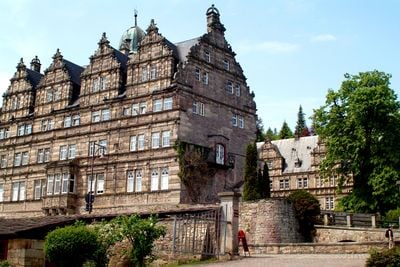
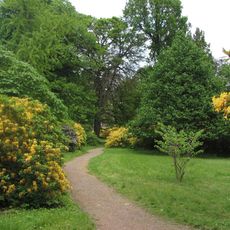
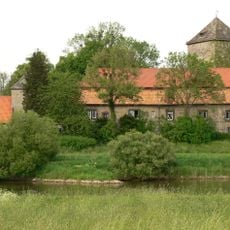
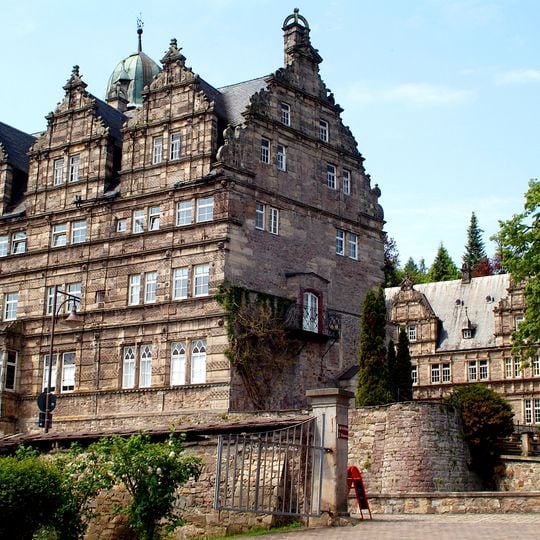
Schloss Hämelschenburg is a water castle in Emmerthal featuring two prominent towers, a protective moat, and architectural details from the Weser Renaissance period in Lower Saxony. The grounds include a 19th-century park planted with exotic trees that surround the main building.
A castle of the Everstein counts stood here from the 14th century; it passed to the Klencke family in 1437 and burned down in 1487 during the Great Feud, then again entirely in 1544. From 1588 Georg Klencke and Anna von Holle rebuilt it as a water castle, completed in 1613 by their son Ludolf and his mother.
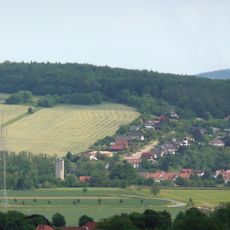
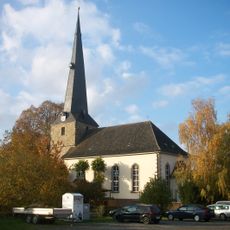
The castle church, originally a chapel dedicated to Mary built in 1563, received its Baroque interior from Anna von Holle in 1603 and became the Reformed village church in 1652. The name Hämelschenburg probably derives from the earlier settlement Hermersenburg, perhaps linked to the builder Hermann III von Everstein.
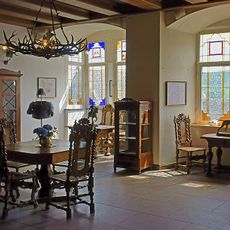
Part of the castle is still lived in by Klencke descendants; the Red Hall and other state rooms are shown on guided tours. The castle church, the former St. Mary's chapel with its Baroque interior, can be visited on weekend tours outside service times. The complex stands on the Weser Renaissance Road and the Niedersachsenweg, and is a stop for pilgrims walking the West German route to Santiago de Compostela.
Anna von Holle protected the castle during the Thirty Years' War by forming clever political alliances and negotiating protection agreements with competing military forces. Her diplomatic skill allowed the property to escape destruction during one of the region's most destructive conflicts.
The community of curious travelers
AroundUs brings together thousands of curated places, local tips, and hidden gems, enriched daily by 93,646 contributors worldwide.