Golzheimer Friedhof, Cemetery and architectural monument in Düsseldorf, Germany
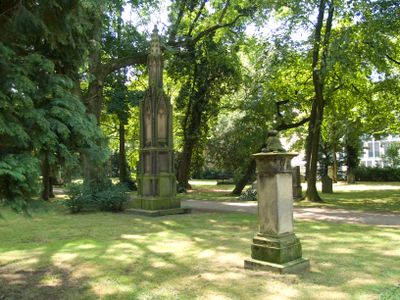
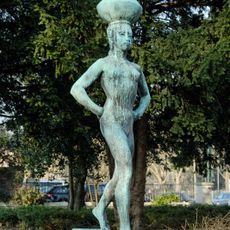
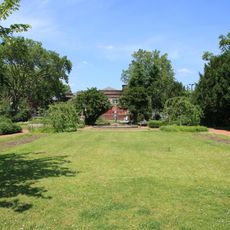
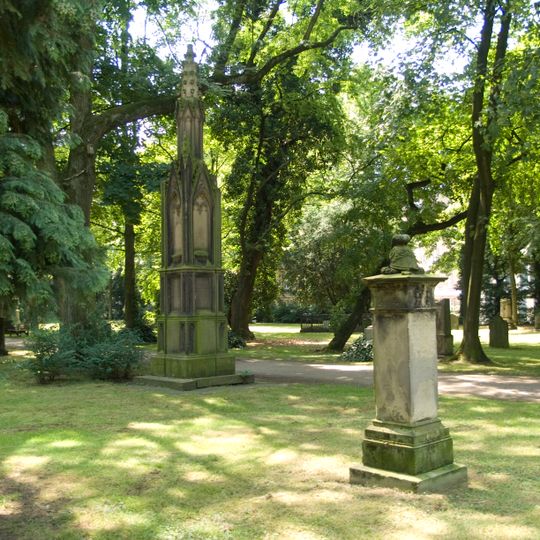
Golzheimer Friedhof is a cemetery and architectural monument with walking paths connecting gravestones, sculptures, and mausoleums in varying artistic styles from different periods. The grounds display a range of burial monuments, from simple stones to elaborate artistic works that mark different eras.
Golzheimer Friedhof opened in 1805 as Düsseldorf's first municipal cemetery, replacing the overcrowded churchyard of St. Lambertus in the old town. Elector Maximilian Joseph had commissioned court architect Kaspar Anton Huschberger on 27 January 1804 to find a site; the choice fell on a rectangular plot about two kilometres north of the city near Golzheim, on a sandbank above the Rhine. Catholics received the larger southern section, Protestants the northern one. The cemetery was enlarged in 1816, 1838 and 1869 as the population grew.
The cemetery's layout still follows Maximilian Friedrich Weyhe's design: a network of paths dividing the grounds into eight rectangular fields, with lime trees along the walks. The 1825 burial regulations allowed hereditary family plots along the boundary hedges; only a few survive, and most of the iron grilles that once enclosed them were removed and melted down as war material during the two world wars.
The grounds now function as a public green space open year-round for walking and visiting. Because the tombstones are protected under monument conservation laws, visitors should move respectfully through the site.
The cemetery was laid out in 1805 on a rectangular plot about two kilometres north of the city, beside a two-metre sandbank on the Rhine that provided flood protection and suitable soil for burials. The architect Johann Peter Cremer's 1809 design for twin gatehouses in Revolutionary style was never built.
The community of curious travelers
AroundUs brings together thousands of curated places, local tips, and hidden gems, enriched daily by 94,399 contributors worldwide.