Römische Ruwerwasserleitung, Roman aqueduct in Rhineland-Palatinate, Germany
The Römische Ruwerwasserleitung is a 12.8 km Roman aqueduct running from the Ruwer near Waldrach to Trier north of the amphitheatre, with a drop of 7.74 m (0.6 ‰). Its channel, 74 cm wide and 96 cm high, was built in the early 2nd century from sandstone blocks, slate rubble and lime mortar, partly on bridge structures.
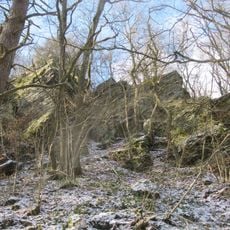
The conduit was built in the early 2nd century AD from sandstone blocks, slate rubble and lime mortar, partly carried on bridge structures. It supplied Augusta Treverorum (Trier) with Ruwer water, also feeding the Kaiserthermen and Barbarathermen. Much of it still lies buried in the western slope of the Ruwer valley.
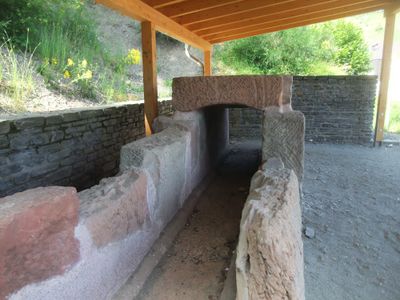
The conduit fed Trier's Kaiserthermen and Barbarathermen, the two great imperial bath complexes, as well as public fountains and reservoirs north of the amphitheatre. Its channel measured 74 cm wide and 96 cm high, with water about 60 cm deep, a scale visitors can judge from the sinter and plaster marks on the surviving walls.
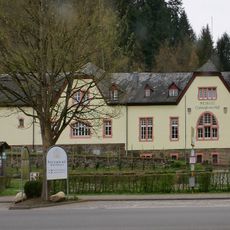
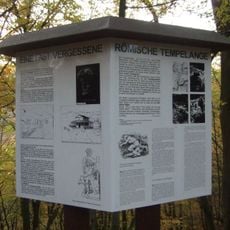
Original remains were uncovered in Waldrach near the former railway station, directly on the Ruwer-Hochwald cycle path. A short reconstructed section stands on a concrete base by the Ruwertalstraße (Kreisstraße 12) toward Korlingen, on the tourist Roman road. The concrete base was built with stone from the original conduit, dug up in 1974 when the Ruwertalstraße was rerouted. Most of the conduit still lies buried in the western slope of the Ruwer valley.
Most of the 12.8 km conduit still lies buried in the western slope of the Ruwer valley; only a short stretch was exposed in 1974 during roadworks near Waldrach's former station and rebuilt on a concrete base using its original stones.
The community of curious travelers
AroundUs brings together thousands of curated places, local tips, and hidden gems, enriched daily by 93,175 contributors worldwide.