Hauptfriedhof Trier, Cultural heritage cemetery in Trier, Germany
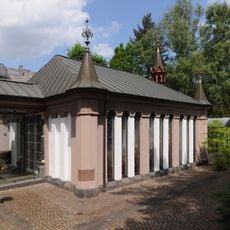
This main cemetery spans 15 hectares and holds monuments in neoclassical, historicist, and art nouveau styles built from the 1800s onward. The burial grounds contain family tombs, individual graves, and sections reserved for specific communities across its landscaped grounds.
The burial ground opened in 1804 to replace older cemeteries within the city and has served Trier ever since. After the World Wars, significant portions became military cemeteries honoring thousands of fallen soldiers from both conflicts.
The cemetery preserves the burial culture of Trier's old families: their historic family tombs in the old section mix historicist and Jugendstil forms, and some plots have since been reassigned. The Jewish section, part of the cemetery since 1920, holds 261 grave sites, at least 241 of them occupied. Several local religious orders maintain small, uniformly marked burial fields for their members.
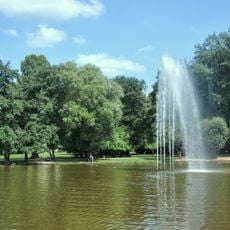
The cemetery is the largest green space in Trier, covering 15 hectares. The main entrance is at Herzogenbuscher Straße 8, with a north entrance at An der Hospitalsmühle 19. The war graves were expanded between 1955 and 1960, and the Jewish section, added in 1920, has 261 grave sites.
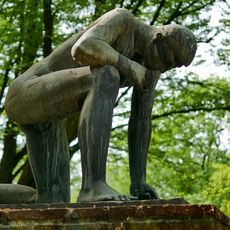
A monument created in 1950 shows a kneeling figure with head bowed, standing as a memorial to those who lost their lives under Nazi rule. The sculpture draws visitors because its simple gesture speaks to loss without listing specific names.
The community of curious travelers
AroundUs brings together thousands of curated places, local tips, and hidden gems, enriched daily by 93,058 contributors worldwide.