Männer von Hunteburg, Bog body archaeological site in Bohmte, Germany
The Männer von Hunteburg are two preserved bodies from the Iron Age discovered in 1949 during peat extraction in the Campemoor area. They are now stored and studied at the Lower Saxony State Museum in Hannover.
The remains date from between 245 and 415 CE and were buried approximately 105 centimeters beneath the moor surface. They lay close to each other, offering rare insight into that distant period.
These remains show how people in this period cared for their dead and what clothing they wore in daily life. The preserved textiles reveal that craftspeople of the time mastered dyeing techniques and created fabrics of considerable skill.
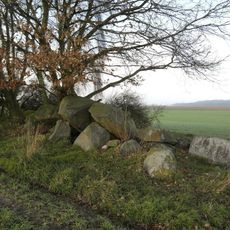
The remains are housed at the museum in Hannover where visitors interested in archaeology and ancient cultures can view them. The moor area near Bohmte where they were found remains accessible to those wanting to visit the original discovery site.
The cloaks worn by these men rank among the best-preserved Iron Age textiles found anywhere in Europe. One cloak was originally dyed in striking shades of blue and yellow, demonstrating the sophisticated dyeing skills of that era.
The community of curious travelers
AroundUs brings together thousands of curated places, local tips, and hidden gems, enriched daily by 91,183 contributors worldwide.