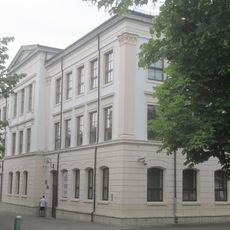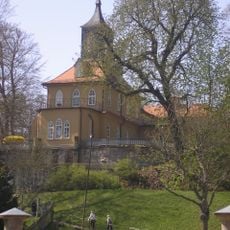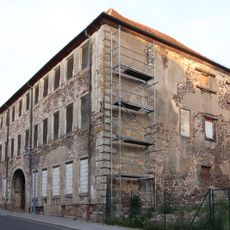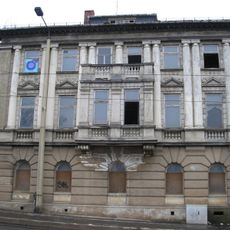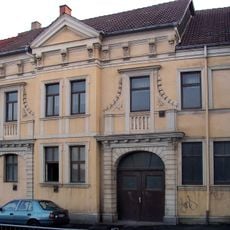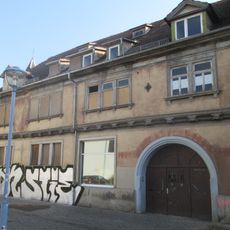
Volkshaus zum Mohren, Gotha, Cultural heritage monument in Gotha, Germany
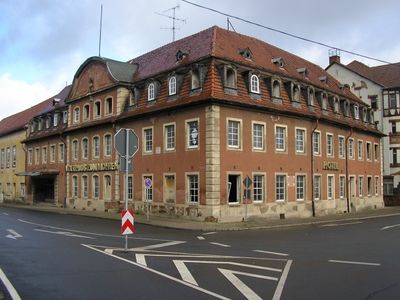
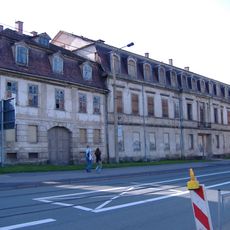
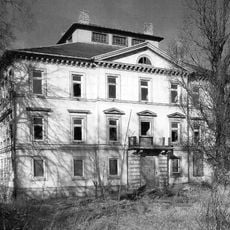
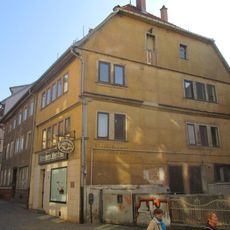
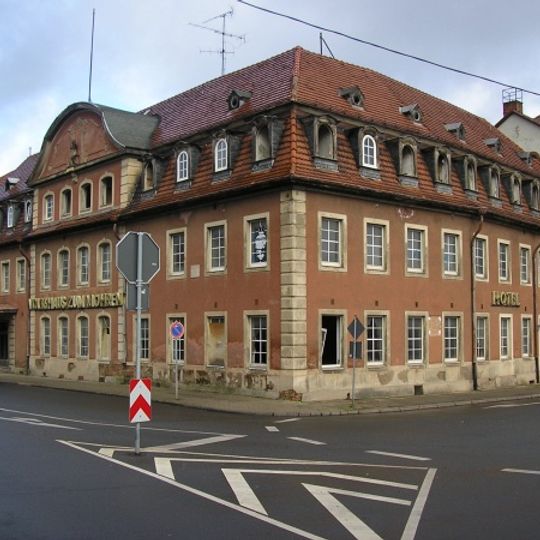
The Volkshaus zum Mohren is a building in Gotha located at a key street intersection in the Mohrenvorstadt district. The structure served for generations as a gathering place for social and political meetings that brought the community together.
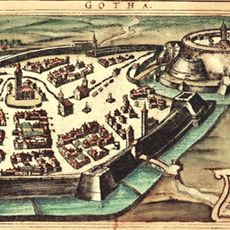
The building was first documented in 1553 and remained the only residence preserved when baroque city fortifications were constructed from 1660 to 1663. This survival makes it a rare witness to a time of dramatic change in the city.
The name "Zum Mohren" probably refers to Saint Maurice, the Roman soldier from Thebes venerated since the 4th century; the same name appears on many inns and pharmacies. From 1907 the Social Democrat Wilhelm Bock bought the house for 140,000 gold marks and passed it to the party's Volkshaus company, giving workers' and trade-union members a shared home.
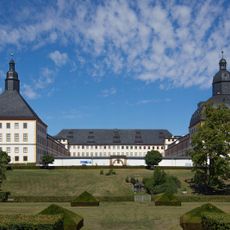
The building was demolished in 2007, so there is no structure left to visit at Mohrenstraße 18. The site lies in the Mohrenvorstadt, outside the medieval core, where the Via Regia (today B 7) crossed the Ohrdruf–Langensalza road (today B 247). The framed wallpaper fragment with Collendière's inscription is kept at Schloss Friedenstein.
Napoleon stayed here on 25–27 October 1813, not during the Russian campaign but on his retreat after the Battle of Leipzig. His adjutant Collendière wrote a note on the wallpaper of the so-called Napoleon Room; the framed fragment is now kept at Friedenstein Castle. Two weeks later King Frederick William III of Prussia also lodged here.
The community of curious travelers
AroundUs brings together thousands of curated places, local tips, and hidden gems, enriched daily by 95,465 contributors worldwide.