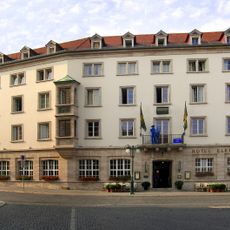
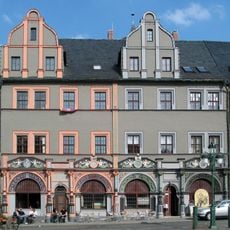
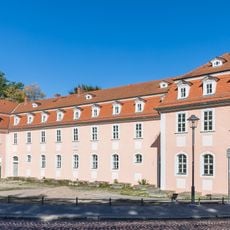
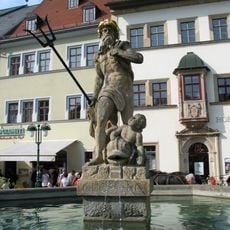
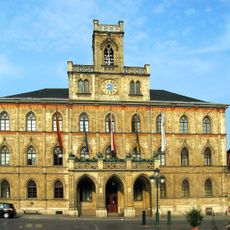
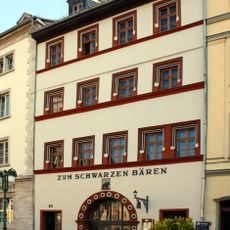
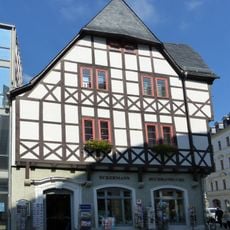
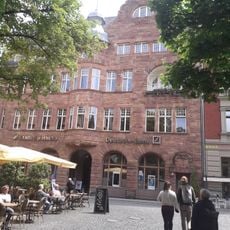
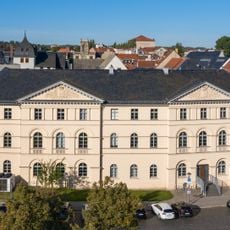
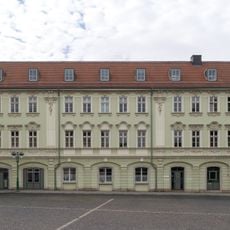
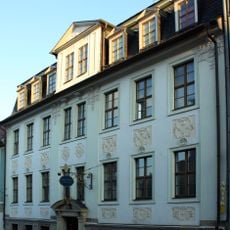
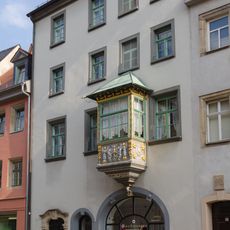
Stadthaus, Renaissance building in Weimar, Germany.
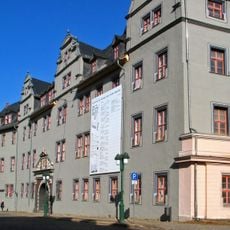
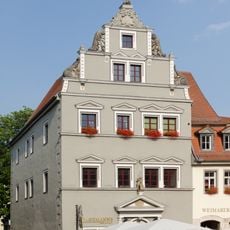
The Stadthaus is a Renaissance building in Weimar with symmetrical proportions, geometric patterns, and refined architectural details from the 15th century. The structure displays clean lines and expertly crafted facades that reflect the city's prosperity during this period.
Landgrave Friedrich the Simple handed the building to the city in 1432, and it has stayed in municipal hands since. From 1526 to 1547 it served as council and trading house, with bakers', butchers' and shoemakers' stalls on the ground floor. A bomb raid on 9 February 1945 destroyed it completely; the ruin was cleared in 1956 and the historic facade rebuilt in 1968–1971.
The name Stadthaus dates from the Goethe era, when the former council and trading house was turned into a venue for masquerade balls, concerts and lectures. Guests included Franz Liszt, Hoffmann von Fallersleben, Hector Berlioz and the sculptor Ernst Rietschel. Today the building holds the Ratskeller restaurant, a tourist information office, a travel agency and apartments.
The Stadthaus stands on the east side of the Markt, at the corner with the Grüner Markt, in central Weimar. The tourist information office is inside the building, and the Ratskeller restaurant occupies part of it. From the Ratskeller you can see the underground passage that links the building with the Rathaus across the square.
A passage under the market square links the Stadthaus with the Rathaus on the opposite side; it can be seen from inside the Ratskeller restaurant in the building's cellar. From 1540 to 1812 the gable niche held the Matz von Weimar, a figure now gone from the facade.
The community of curious travelers
AroundUs brings together thousands of curated places, local tips, and hidden gems, enriched daily by 93,362 contributors worldwide.