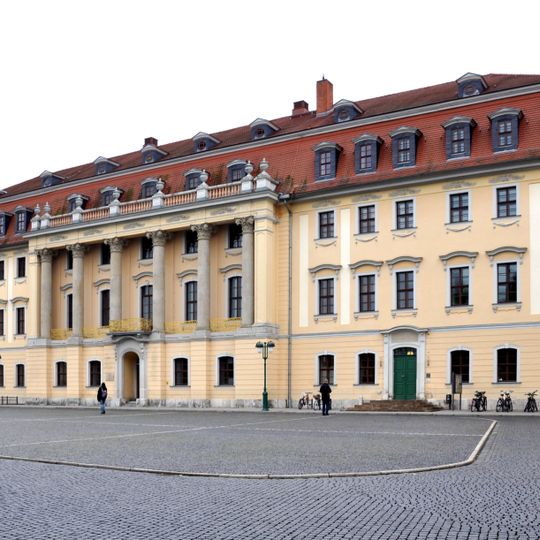
Fürstenhaus Weimar, Cultural heritage monument in Weimar, Germany.
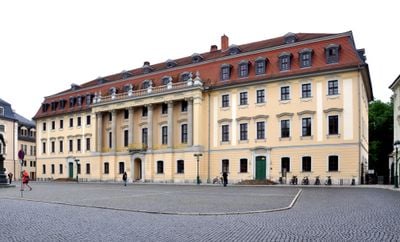
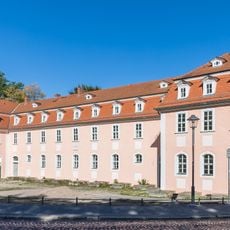
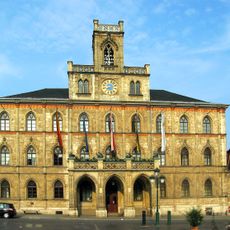
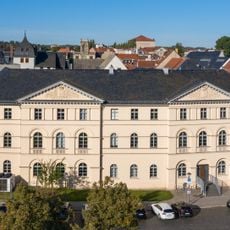
The Fürstenhaus is a neoclassical building in Weimar featuring a grand stone facade with columns topped by Corinthian capitals. A mansard roof crowns the structure, while decorative urns ornament a raised balcony positioned above the columns.
Construction took place between 1770 and 1774 under architect Anton Georg Hauptmann, with the building initially serving as the parliament of the Grand Duchy of Saxe-Weimar-Eisenach. This political function ended in 1918, after which the building found a different role in the city's cultural life.
The building now hosts the Franz Liszt University of Music, filling its halls with student performances and lessons every day. This musical function has become deeply woven into the identity of the place over more than 70 years.
The building sits in the heart of Weimar, within walking distance of the town center and other historical landmarks. Keep in mind that interior access may be limited, so it is worth checking ahead for current events or visiting hours.
Behind the building grows a Ginkgo tree planted around 1815 at Goethe's direction, now protected as a natural monument. This tree serves as a quiet reminder of how architecture and nature were connected in this historical city.
The community of curious travelers
AroundUs brings together thousands of curated places, local tips, and hidden gems, enriched daily by 60,000 contributors worldwide.