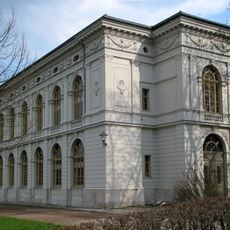
Weißer Schwan, Historic inn in Weimar, Germany
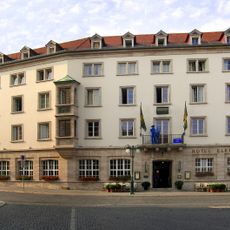
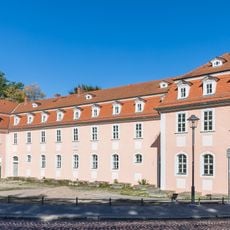
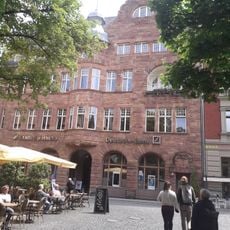
Weißer Schwan is a historic inn at Frauentorstraße 23, on the corner of Seifengasse, directly opposite Goethe's house on the Frauenplan in Weimar's old town. The building is first recorded on a city map in 1569 and was named as an inn in front of the Frauentor gate in 1638. A cannonball from 1806 is kept as a reminder of French soldiers quartered there during the occupation.
The house appears on Weimar's town plan in 1569 and was recorded as an inn "vorm Frauentor" in 1638. In 1688 the landlord Sebastian John is named "im weißen Schwan", and a 1764 mention calls it the "Gasthof zum Schwane vor dem Frauenthore". Its rise came from its position opposite Goethe's house on the Frauenplan, where he lodged his visitors.
The inn's name comes from its 1688 landlord Sebastian John, recorded "im weißen Schwan"; a legend tells of the ex-monk Andreas John and the former nun Nella, who gave him an amulet bearing a white swan. A cannonball from 1806 is kept as a reminder of French soldiers quartered here during the occupation.
The building sits in downtown Weimar and is easily walkable from the city center, with clear signage in the old town. When visiting, note that dining spaces are distributed across multiple floors and stairs are needed to explore them.
A cannonball from 1806 is set into the building, a reminder of French soldiers who were quartered here during the occupation. A legend also tells of the former monk Andreas John, who met the former nun Nella here and, after she gave him a swan amulet, became a brewer.
The community of curious travelers
AroundUs brings together thousands of curated places, local tips, and hidden gems, enriched daily by 93,530 contributors worldwide.