Weyertorburg, Medieval city gate in Altstadt-Süd, Germany
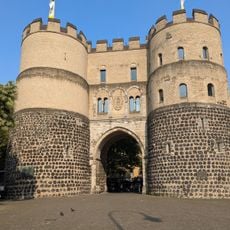
Weyertorburg was the late Romanesque gate of Cologne's south-western ring wall, begun in the first third of the 13th century and demolished in 1889. It stood at the highest point of the new wall, where the Weyerstraße met the field side, and replaced the older Griechenpforte. Nothing of the gate survives above ground.
Construction of the late Romanesque Weyertor began in the first third of the 13th century, planned by the city council with imperial consent as one of 14 landward gates of the new ring wall. It replaced the older Griechenpforte and carried the name porta piscine around 1232. Between 1583 and 1592 the gate was rebuilt with a bastion and a drawbridge that collapsed; the gate was demolished in 1889 during a later expansion of the city.
The name derives from a pond, the Weiherkülchen, likely formed by the Gleueler Bach; Latin charters of 1232 call it porta piscine. From the 15th century the Weyerstraße was known as Kaiserstraße, because emperors and kings entering Cologne from the west rode through this gate. In 1812/13 the French administration named it Porte de l'Etang.
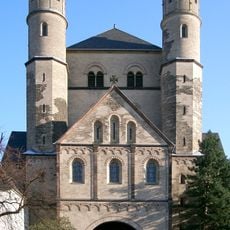
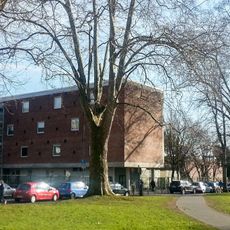
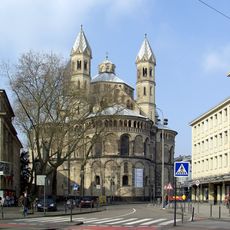
The gate no longer stands: it was demolished in 1889, so nothing of the structure can be visited today. Its site lies in Altstadt-Süd at the foot of the Weyerstraße, opposite St. Pantaleon, where the street still follows the old route toward Zülpich, Trier and the Eifel.
The gate no longer stands: it was demolished in 1889 during a later phase of urban expansion. What survives is its name, carried on by the Weyerstraße and by the memory of a structure that once marked the highest point of Cologne's new ring wall.
The community of curious travelers
AroundUs brings together thousands of curated places, local tips, and hidden gems, enriched daily by 93,894 contributors worldwide.