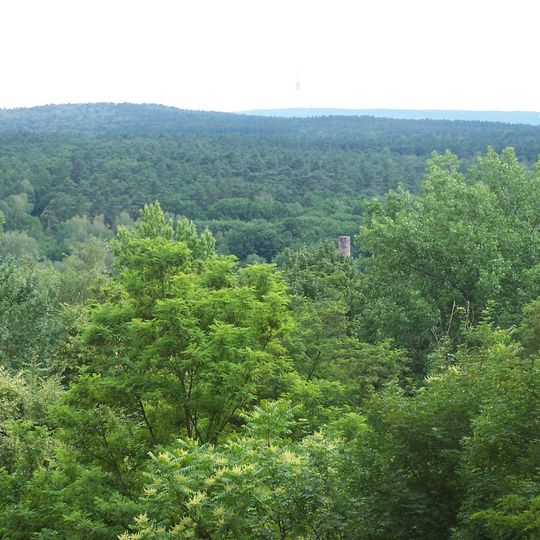
Grunewald, Commercial forest in southwestern Berlin, Germany
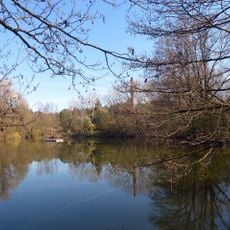
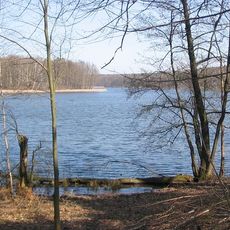
Grunewald is a large forest in southwestern Berlin with numerous lakes, hills, and extensive pathways for walking and cycling. The woodland stretches across multiple city districts and offers diverse landscapes for exploration.
The forest was first called Teltower Heide and Spandower Heide. In 1542 Caspar Theiss built a hunting lodge for Elector Joachim II, named Zum grünen Wald, which gave the forest its name. It served as a princely hunting ground until 1904 and was enclosed by a game fence from 1849 to 1904. In 1915 the Dauerwaldvertrag brought large parts of it into public ownership.
The forest's name comes from the hunting lodge "Zum grünen Wald", built in 1542 by Caspar Theiss for Elector Joachim II. A Berlin street song from 1890, "Im Grunewald, im Grunewald ist Holzauktion", recalls the clearing sales of the late 19th century. The Schildhorn peninsula on the Havel carries a monument of 1845, designed by Friedrich August Stüler after sketches by King Frederick William IV, marking the legend of the Slavic prince Jaxa von Köpenick.
The forest is served by S-Bahn stations on several lines: Grunewald (S7) at the main entrance, Nikolassee (S1, S7), Schlachtensee (S1), Heerstraße and Pichelsberg (S3, S75). The U3 stops at Krumme Lanke and Onkel Toms Hütte on the southeastern edge. The AVUS, now part of the A115 motorway, cuts through the wood. Some areas are nature reserves closed to visitors to protect amphibians and birds.
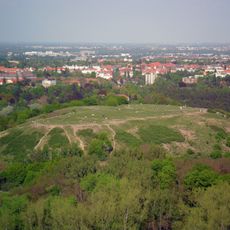
Teufelsberg, an artificial hill made from World War II rubble, rises to about 117 meters and holds remnants of a Cold War listening station. The hill shows in a striking way how wartime and Cold War history remains embedded in this landscape.
The community of curious travelers
AroundUs brings together thousands of curated places, local tips, and hidden gems, enriched daily by 94,644 contributors worldwide.