Hus Aren, Cultural heritage monument in Lower Saxony, Germany
Hus Aren is an archaeological site featuring the remains of a medieval castle in Lower Saxony. Its foundations, walls, and structural elements come from different building periods and reveal how fortification techniques changed over time.
Hus Aren was a lowland castle of the lords of Arnheim, first documented in 1273 when Duke John of Brunswick-Lüneburg confirmed to the Bishop of Minden that he held no rights to it. The Counts of Schaumburg gained shares in the castle around the mid-13th century and displaced the Arnheim family. A dispute between the bishop and the counts ended with the castle's demolition in 1302.
The name Hus Aren means "house of the Arnheim family", after the noble lords of Arnheim who held the castle. They were pushed out by the Counts of Schaumburg in the mid-13th century, and after 1300 the family disappears from written records, probably absorbed into the town elite of Stadthagen. Today the hill lies on a pasture beside a field path, marked by a small stand of trees and one conspicuous single tree.
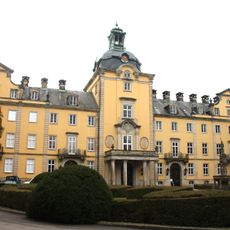
The castle site lies on a meadow beside a field path about 400 m east of Nordholz, roughly 3.5 km northwest of Bückeburg Palace. The moat outline shows best in spring when water is high; in dry seasons it is faint. The hill is only about 0.5 m high, so the spot is easy to miss without the single tree as a landmark.
Among the roughly 720 medieval pottery fragments found at the site is a complete jug. The oldest pieces date the castle to the mid-12th century, and Siegburg stoneware jugs and pots show trade links far beyond the Bückeburger Aue.
The community of curious travelers
AroundUs brings together thousands of curated places, local tips, and hidden gems, enriched daily by 93,486 contributors worldwide.