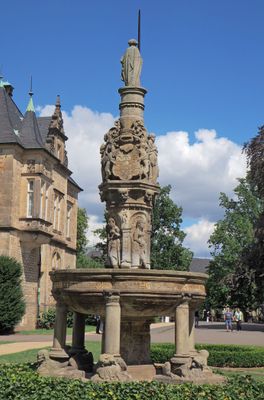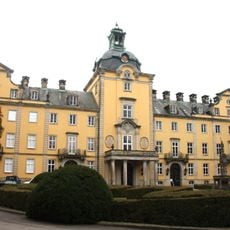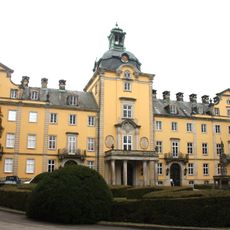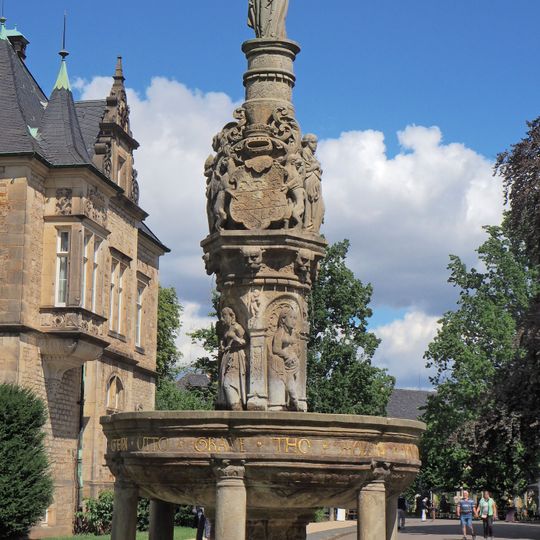
Tugendbrunnen, Renaissance fountain at Schloss Bückeburg, Germany.
The Tugendbrunnen is a Renaissance fountain featuring bronze sculptures arranged in an octagonal pool with multiple tiers. The figures display detailed craftsmanship and are positioned to emphasize moral concepts through their poses and attributes.
The fountain was created in the 16th century as part of the Schloss Bückeburg estate to complement its Renaissance design. Its construction reflected the period's practice of using such fountains as symbols of learning and moral values in noble gardens.
The fountain features allegorical bronze figures representing moral virtues, and their arrangement teaches visitors about values through visual storytelling. Walking around the pool, you can observe how each figure communicates its lesson through pose and detail.
The fountain is located on the castle grounds and can be visited during regular opening hours. It helps to spend time observing the sculptures from different angles, as the details and symbolism reveal themselves gradually from various viewpoints.
Each bronze figure was crafted with specific attributes that represent its moral principle, often creating puzzles that visitors must decode themselves. This playful approach to teaching virtue was typical of Renaissance court culture.
The community of curious travelers
AroundUs brings together thousands of curated places, local tips, and hidden gems, enriched daily by 92,720 contributors worldwide.