Hubschraubermuseum Bückeburg, Aviation museum in Bückeburg, Germany.
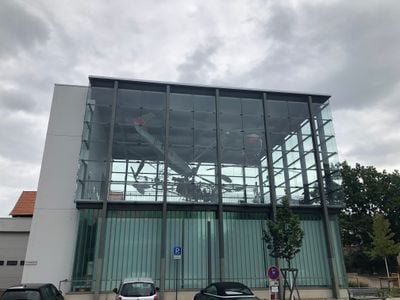
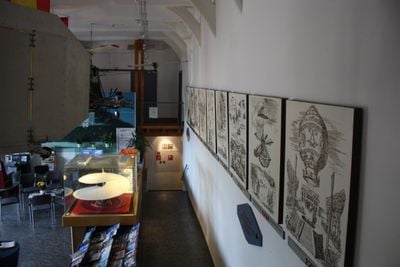
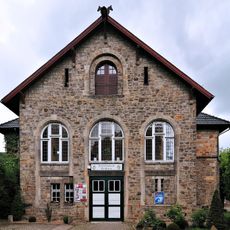
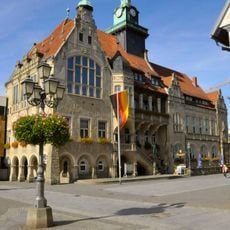
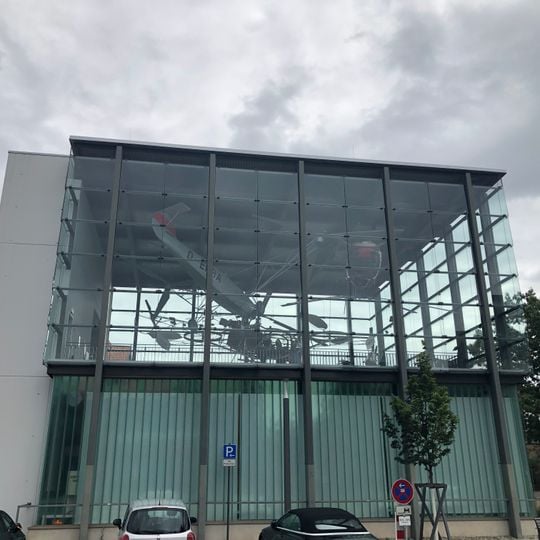
The Hubschraubermuseum Bückeburg is an aviation museum housed in a timber-framed building with modern glass extensions, displaying more than 50 helicopters, gyrocopters, and drones. The collection occupies roughly 2,000 square meters of exhibition space and shows aircraft from different makers and periods.
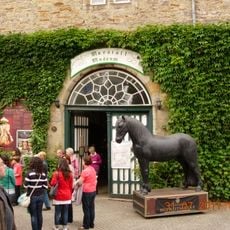
Sergeant Major Werner Noltemeyer began the collection in 1961, when his commander ordered him to set up a small helicopter museum on the barracks grounds of the army aviation school at Achum airfield. It stayed inside the military security zone, open only to soldiers, special guests and registered school classes. In 1970 the town gave the growing collection the Münchhausen-Burgmannshof in the centre, and the museum opened to the public there on 9 June 1971. A 2,000-square-metre extension followed in 1978–1980, and a modern glass building opened in June 2011 for the 40th anniversary.
The museum shows how people learned to fly helicopters and use them for different tasks in everyday life. The exhibits reveal that these aircraft became important not just for the military but also for rescue operations and many other practical purposes.
The museum sits at Sablé-Platz in Bückeburg's town centre, about 50 km west of Hanover. The entrance is through the modern glass extension, where a blue parking sign marks the lot in front. Inside, a dark grey "Rundgang" sign with a white arrow points visitors along the tour route; the exhibition continues through the 1980 hall and the 2011 glass building.
The museum's emblem is Leonardo da Vinci's 1483 aerial screw drawing, the same era in which the building, a former Burgmannshof, was first documented in 1463. The collection also holds a replica of the Cornu No. II, the machine behind the first successful helicopter flight on 13 November 1907.
The community of curious travelers
AroundUs brings together thousands of curated places, local tips, and hidden gems, enriched daily by 94,059 contributors worldwide.