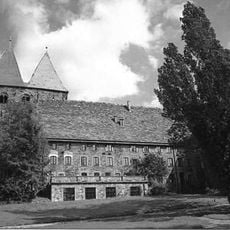
Fürstliche Hofreitschule, Horse riding school museum in Bückeburg, Germany
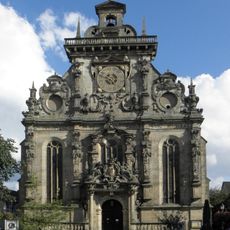
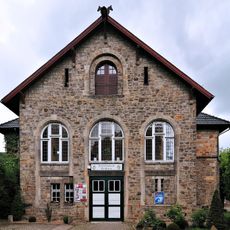
The Fürstliche Hofreitschule is a museum with an extensive collection about horses and horsemanship in Bückeburg. The exhibition displays historical saddles, bridles, artworks, and information about how riding techniques developed across the centuries.
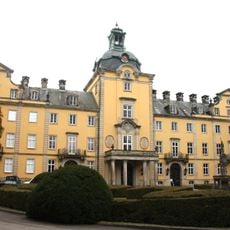
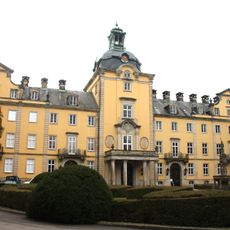
Built between 1609 and 1622 as the "Reit- und Wagenhauß" under Count Ernst zu Holstein-Schaumburg, the Marstall housed the riding and carriage horses of the princes of Schaumburg-Lippe until the 1950s. A 1797 fire destroyed the second Marstall with its Reithaus, prompting Regent Princess Juliane to convert the ballhouse into a riding hall. Renovated in 2004, it became a museum of baroque equestrian art.
The name refers to the princely court riding school of the House of Schaumburg-Lippe, whose stables here held their riding and carriage horses until the 1950s. Today the museum keeps eight baroque horse breeds, among them Berber, Andalusian, Lusitano, Murgese, Frederiksborg, Lipizzaner, Genete and Knabstrupper, shown in some 250 demonstrations a year, mostly on weekends from April to October.
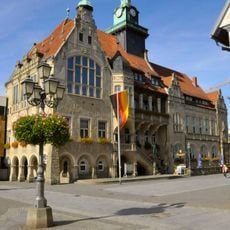
The museum sits in central Bückeburg and is easy to reach on foot. Visitors should note that training sessions and opening times can vary, so it's worth checking ahead before planning your visit.
The museum keeps eight baroque horse breeds: Berber, Andalusian, Lusitano, Murgese, Frederiksborg, Lipizzaner, Genet and Knabstrupper. From 1753 Count Wilhelm mounted his "Black Riders" exclusively on black and dark-brown Andalusians; the corps reached 180 men.
The community of curious travelers
AroundUs brings together thousands of curated places, local tips, and hidden gems, enriched daily by 93,101 contributors worldwide.