Schloss Bückeburg, Renaissance castle in Bückeburg, Germany
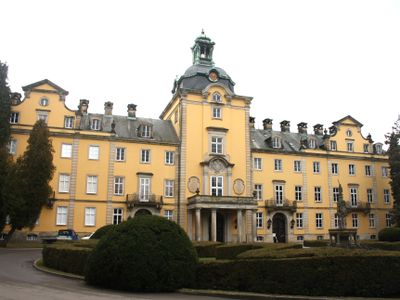
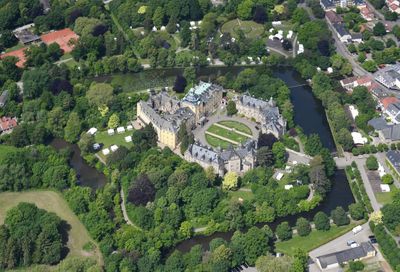
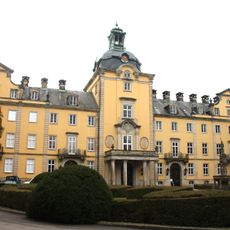
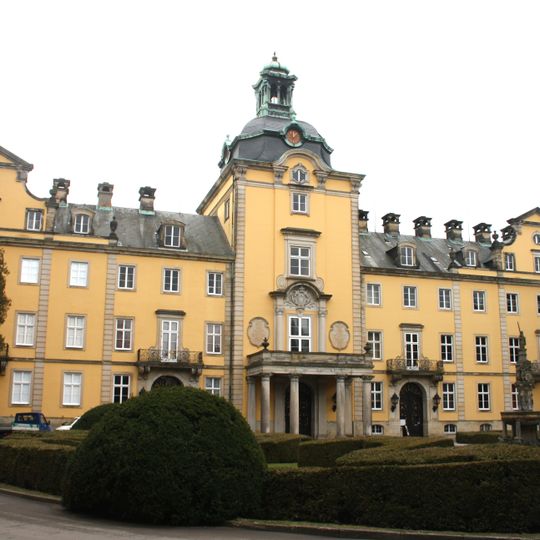
Schloss Bückeburg is a Renaissance castle in Bückeburg featuring four wings arranged around a central courtyard. The structure displays characteristic architectural proportions and richly decorated rooms that span from the Renaissance period onward.
The castle began as a defensive tower in 1304 but was transformed into a Renaissance palace between 1560 and 1564 under Otto IV of Schaumburg. This conversion marked its shift from military to representational purposes.
The castle chapel's wooden decoration was carved by the Hildesheim sculptors Ebbert the Younger and Jonas Wulff and painted in Mannerist style. Whitewashed in 1648 under Count Philipp for his Reformed faith, the frescoes were fully uncovered during the 1879–1885 restoration. When the large organ was installed, the pulpit wall had to be moved almost three metres into the room.
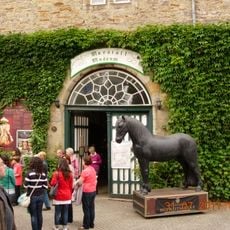
Visitors can explore the castle through guided tours that cover multiple historical rooms including the chapel, banquet hall, and restored kitchen. It is advisable to check opening times in advance to plan your visit appropriately.
In 1989 a replica of Schloss Bückeburg was completed in Obihiro, Japan, where it served as a fairy-tale castle in an amusement park; the park later went bankrupt. The copy is one of the few full-scale reconstructions of a German Weser Renaissance palace outside Europe.
The community of curious travelers
AroundUs brings together thousands of curated places, local tips, and hidden gems, enriched daily by 92,925 contributors worldwide.