Salt museum Soltau, Salt production museum in Soltau, Germany
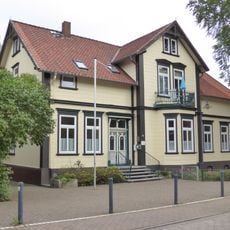
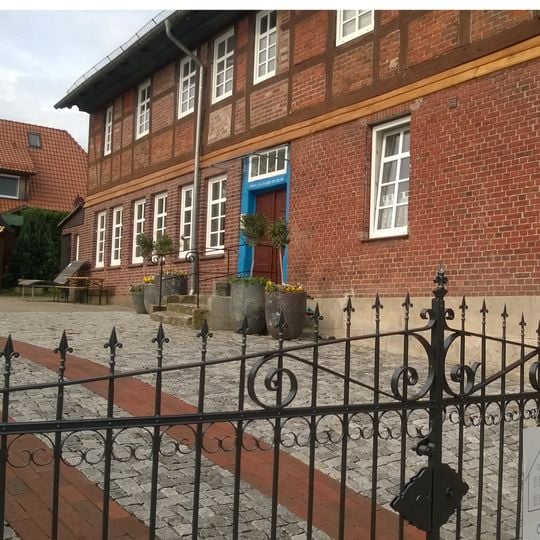
The Soltau Salt Museum occupies the building at Bahnhofstraße 6 and an outdoor site across the street. Indoors it holds one of the largest collections of salt and pepper shakers, the Goebel figurine series. Outside, the Soltau salt-boiling society rebuilt a well house, a historic boiling hut and the graduation tower of a medieval saltworks. The whole site is barrier-free.
People have used the Soltau salt spring for 5,000 years, as archaeological finds show. In 936 King Otto I gave the salt yard, curtis salta, to Quedlinburg Abbey; its salt preserved animal hides made into parchment. From the Middle Ages the Lüneburg salt monopoly barred Soltau citizens from boiling and trading their own salt. In the 19th century Eduard Weinlig failed to get permission for a saltworks, and the museum opened on 30 May 2015.
The salt spring gave Soltau and its river their names, and salt from the curtis salta was used to preserve animal hides turned into parchment at Quedlinburg Abbey. Since 2008 the Soltauer Salzsiederverein has boiled brine from the thermal spa well into Soltauer Salinensalz in open pans, a craft visitors can watch.
Opening hours vary with the season, so it's worth checking ahead before your visit. The museum offers guided tours where staff explain the salt production processes in detail.
The outdoor area opposite Bahnhofstraße 6 holds reconstructions built by the Soltauer Salzsiederverein: a brine well house, a historic boiling hut and a graduation tower modelled on a medieval saltworks. Since 2008 the association has boiled brine from the spa's deep well into Soltauer Salinensalz in open pans.
The community of curious travelers
AroundUs brings together thousands of curated places, local tips, and hidden gems, enriched daily by 93,631 contributors worldwide.