Silcher monument, Stone monument on Neckarinsel, Tübingen, Germany
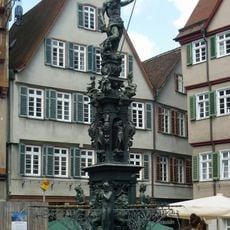
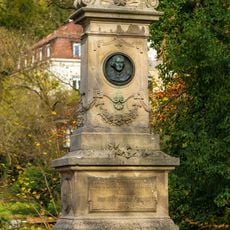
The Silcher monument is a 5.7-meter sandstone sculpture depicting the composer seated in the act of creating music. Surrounding the central figure are groups of characters that represent both military and civilian life scenes.
Designed by Wilhelm Julius Frick, the monument was unveiled in May 1941 during World War II. It stands as one of the few public sculptures created in the city during that historical period.
The monument reflects Silcher's role in preserving German folk traditions through his collection work and his influence as a music teacher in the city. The surrounding figures tell stories about his connection to both artistic creation and everyday life.
The monument stands on the Platanenallee on the Neckar island, within a sandstone ensemble of stages, platforms and a ring-shaped wall built around the central square. The site is reached on foot along the island paths; the sources record no wheelchair ramps, so access for visitors with limited mobility is not documented.
On 5 January 2020, Tübingen citizens and artists from the Zurich collective Neue Dringlichkeit rededicated the monument as a "memorial against the appropriation of the arts by racist and nationalist forces". It had never been removed after the war despite an Allied directive.
The community of curious travelers
AroundUs brings together thousands of curated places, local tips, and hidden gems, enriched daily by 93,849 contributors worldwide.