Samariá Gorge National Park, National park and biosphere reserve in Crete, Greece
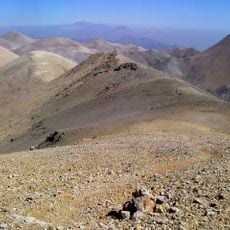
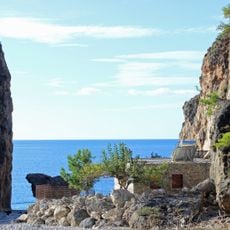
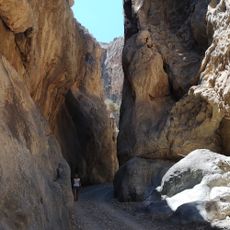
Samariá Gorge National Park is a 16 km canyon in southwest Crete, running from the Omalos plateau at 1,250 m down to Agia Roumeli on the Libyan Sea. Its walls, formed in the Gigilos, Plattenkalk and Trypali rock units, rise up to 600 m, and the bed is a wide stretch of pale gravel and boulders with pines, plane trees and cypresses. At the Gates the walls close to four metres apart.
The gorge served as a rebel hideout during the 19th-century Greek liberation struggles and was never captured. In May 1941, King George II and Prime Minister Emmanouil Tsouderos fled through it to the south coast and escaped to Egypt. It became a national park by royal decree in 1962, and the last inhabitants of Samariá village left that year.
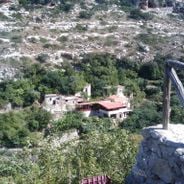
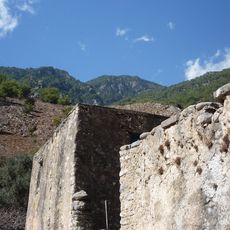
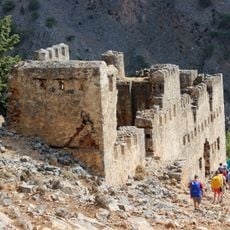
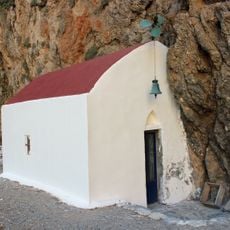
The village and gorge take their names from the church of Óssia María, the village's ancient church. About ten Greek Orthodox chapels stand along the gorge in various states of preservation. The name Samariá comes from the Greek word samári, a pack saddle, suggesting animals were once exchanged there.
Access is seasonal and requires a full day of hiking on marked trails that demand physical stamina and careful footing. Arrive early, bring plenty of water, and wear sturdy boots, as the paths are uneven and sometimes slippery in sections.
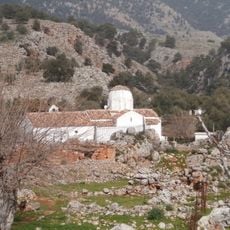
The village of Samariá, about halfway through, was named after the church of Óssia María and was abandoned in 1962, when its last inhabitants left for the national park. The gorge's name comes from this church, not from the village itself.
The community of curious travelers
AroundUs brings together thousands of curated places, local tips, and hidden gems, enriched daily by 92,810 contributors worldwide.