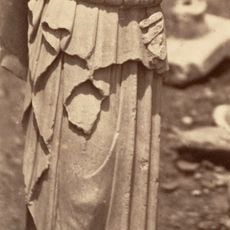
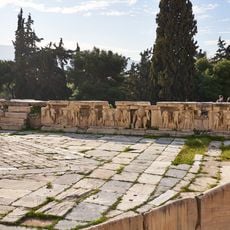
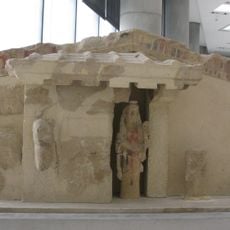
Temenos of Dionysos, Greek sanctuary on southeastern slope of Acropolis, Athens, Greece
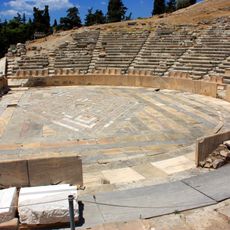
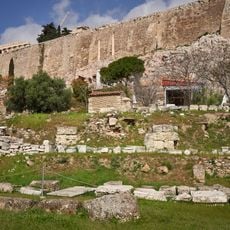
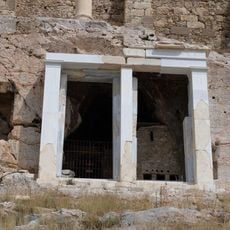
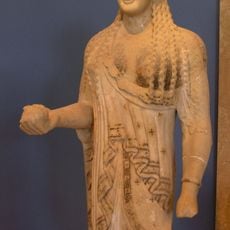
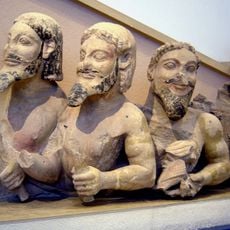
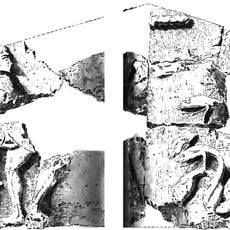
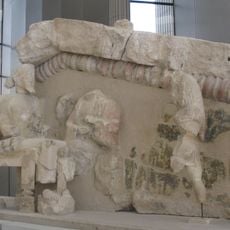
The Temenos of Dionysos is a sacred precinct on the southeastern slope of the Acropolis in Athens. Its best-preserved structure is the Theatre of Dionysos, whose cavea could hold 15,000 to 16,000 spectators. The precinct also contains the foundations of an archaic temple (c. 550–500 BC), a new temple built around 350 BC, a stoa, and an altar.
The sanctuary originated in the 6th century BC when worship of Dionysos Eleutherios arrived from the nearby region of Eleutherai to Athens. Over centuries, the theater structures were expanded and enhanced to accommodate larger audiences and more elaborate productions.
The name Eleuthereus comes from Eleutherai, a Boeotian village on the Attic border, from where the wooden xoanon of Dionysos was brought. During the god's festival, masked men dressed as goats danced the dithyramb in a circle around an altar called the thymele, while spectators watched from the hillside. The word theatron was first coined by the Athenians for the theatre in this sanctuary.
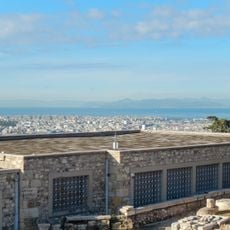
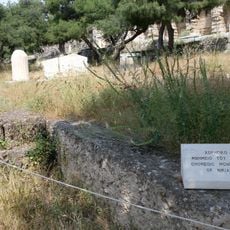
The sanctuary lies at the eastern end of the Acropolis south slope archaeological site, entered from the Street of the Tripods along the east side; the Propylaea entrance plan is still visible in the paving. The Asclepieion is west of the temenos and the Odeon of Pericles east. Only foundations survive apart from the better-preserved theater, so the ground is uneven.
The word theatron was coined by the Athenians for the theatre in this sanctuary. The cavea could hold 15,000 to 16,000 spectators at its largest stage, and the visible remains date mainly to the rebuilding around 350 BC.
The community of curious travelers
AroundUs brings together thousands of curated places, local tips, and hidden gems, enriched daily by 94,405 contributors worldwide.