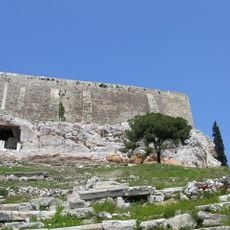
Choragic Monument of Thrasyllos, Ancient memorial structure near the Theater of Dionysus, Athens, Greece
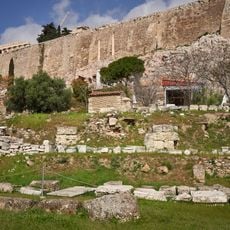
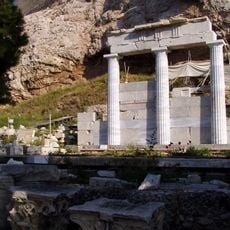
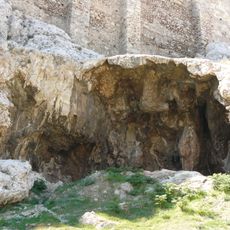
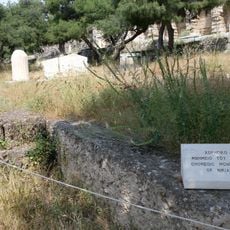
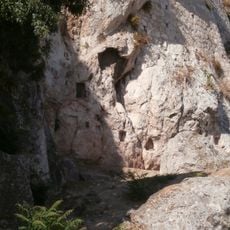
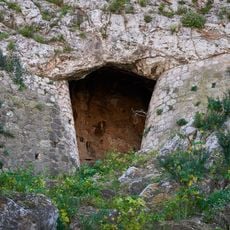
The Choragic Monument of Thrasyllos is an ancient victory monument set into the rock face directly above the Theater of Dionysus in Athens. It consists of a marble wall with two wide doorways, side pilasters, and a central pillar placed in front of a natural cave in the cliff.
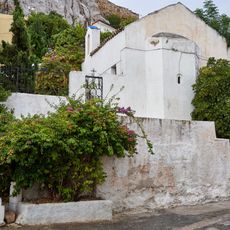
Thrasyllos, son of Thrasyllos of Dekeleia, erected the monument in 320–319 BCE as choregos after his tribe Hippothontis won the men's chorus; the archon was Neaichmos. In 271–270 BCE his son Thrasykles, as agonothetes, added inscriptions recording victories by Hippothontis in the boys' chorus and Pandionis in the men's chorus. A church dedicated to Panaghia Spiliotissa was later installed in the cave and remained in use until the late 20th century.
The monument carries ten olive wreaths carved into its frieze, each marking a victory in a theatrical competition. In ancient Athens, a choregos was a wealthy citizen who funded a chorus for the Dionysian festivals, and this structure was his way of making that achievement permanent.
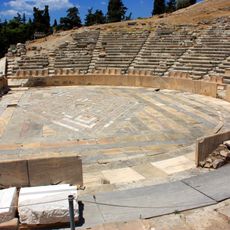
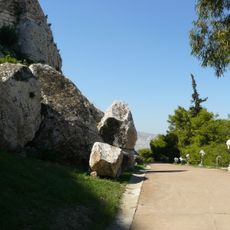
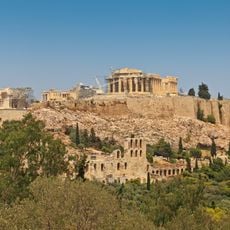
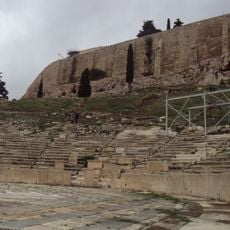
The monument sits along Dionysiou Areopagitou Street, within easy walking distance of the Akropoli metro station. It is best visited alongside the Theater of Dionysus below it, as both sites share the same area at the southern base of the Acropolis hill.
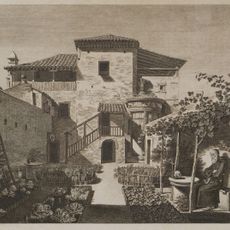
Stuart and Revett recorded a statue of Dionysus where the original tripods had stood, likely added when Phaidros repaired the Theatre of Dionysus in the 4th century CE. Lord Elgin removed this Hellenistic statue in 1802, which spared it when Ottoman bombardment destroyed the monument in 1827.
The community of curious travelers
AroundUs brings together thousands of curated places, local tips, and hidden gems, enriched daily by 94,370 contributors worldwide.