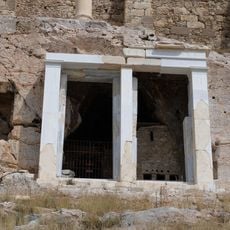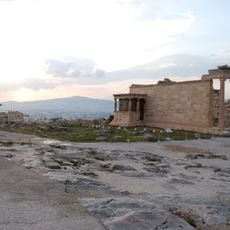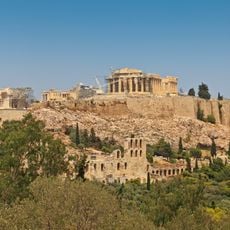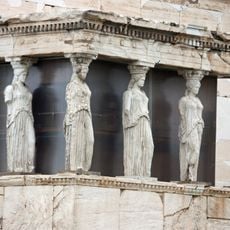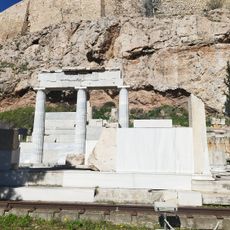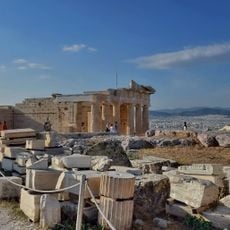
Parthenon, Ancient Greek temple at Acropolis, Greece
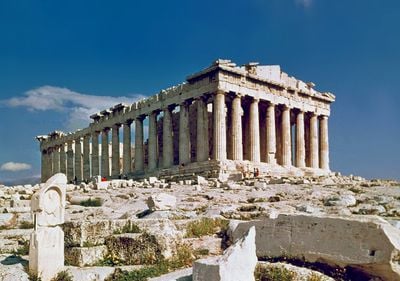
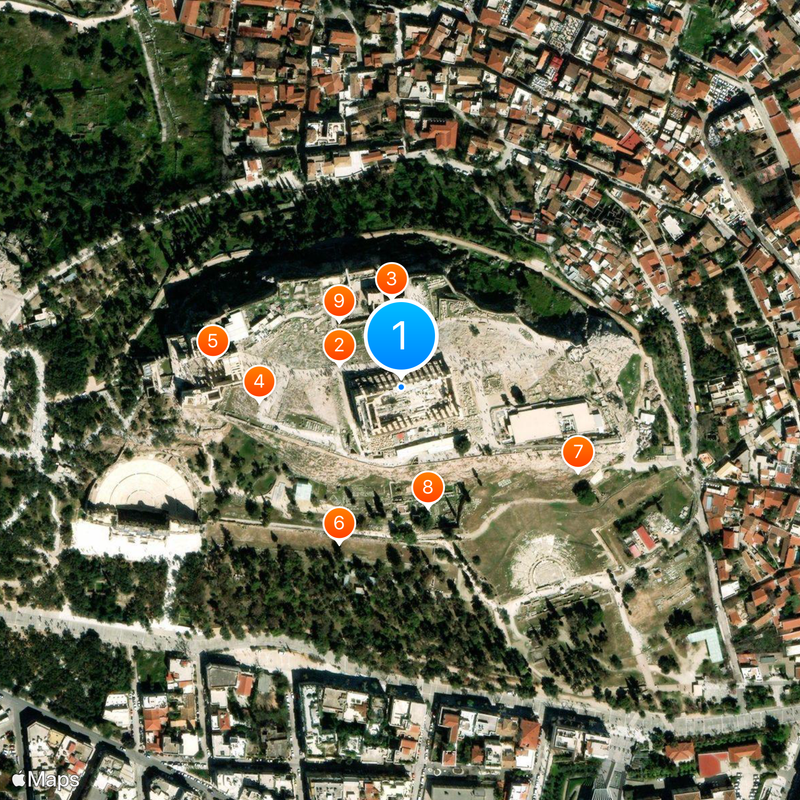
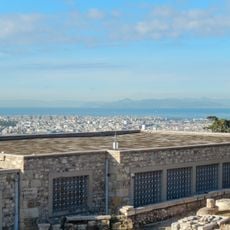
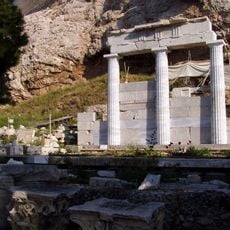
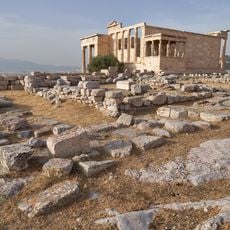
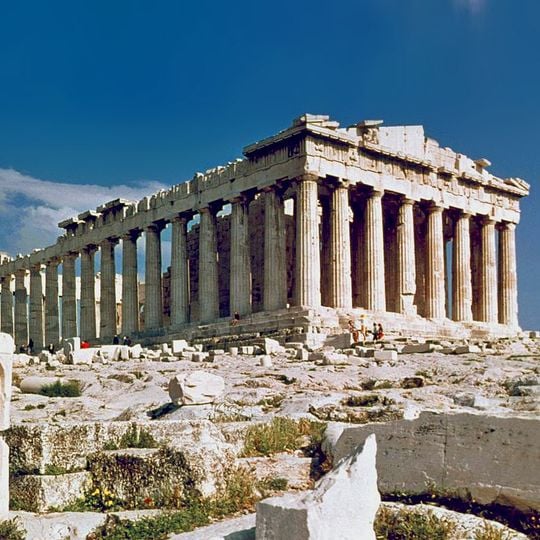
The Parthenon is an ancient temple dedicated to Athena that crowns the Acropolis hill in central Athens. It rests on a three-stepped platform with 46 columns of pale marble arranged around an inner hall, which once contained a towering statue covered in gold and ivory.
Athenian leaders ordered construction in 447 BCE to replace an older temple destroyed by Persian armies in 480 BCE. The building served as a Christian church from the 6th century onward, then became a mosque in 1458 until a Venetian bombardment in 1687 ignited gunpowder stored inside and blew out much of the structure.
Scholars and architects from around the world travel here to study the precision of its proportions and the refinement of its carving. Athenians regard the temple as a defining symbol of their city, and its silhouette appears on everything from coins to public monuments.
The site opens at eight in the morning and closes near sunset throughout the year. Paths leading up the hill are steep and uneven, though a lift near the northern entrance helps visitors who cannot manage the steps.
No line in the building is perfectly straight or level, though it appears so from a distance. The architects curved the floor slightly upward in the center and tilted every column inward by a few degrees to correct distortions the eye would otherwise create.
The community of curious travelers
AroundUs brings together thousands of curated places, local tips, and hidden gems, enriched daily by 90,798 contributors worldwide.