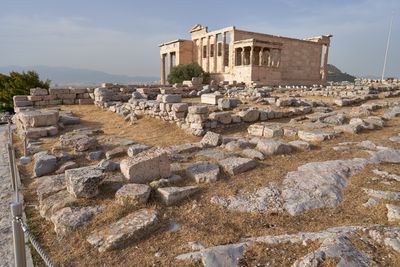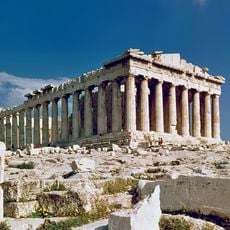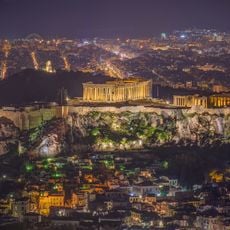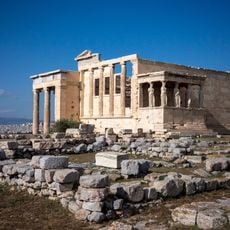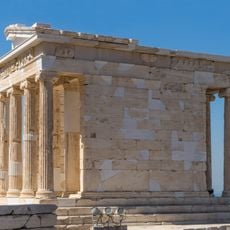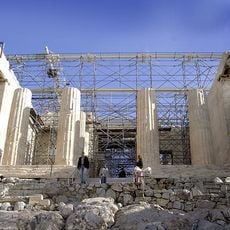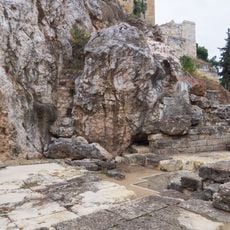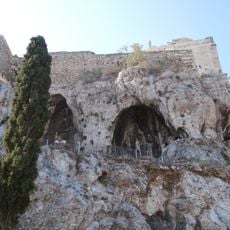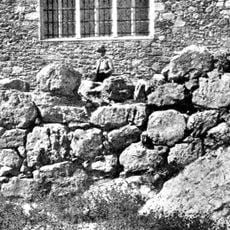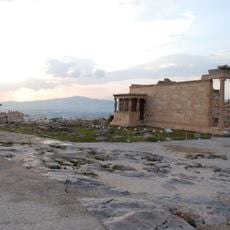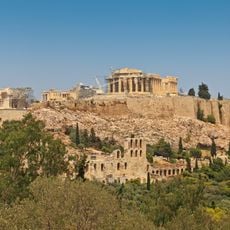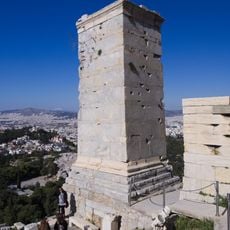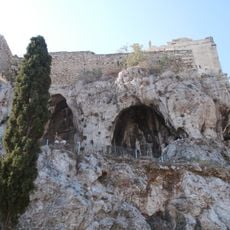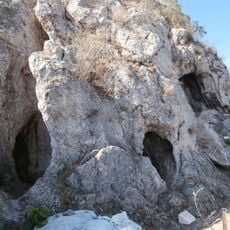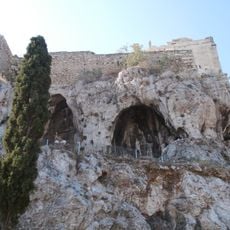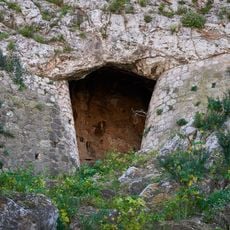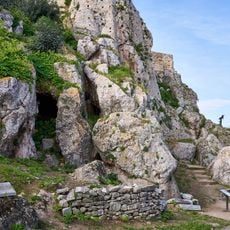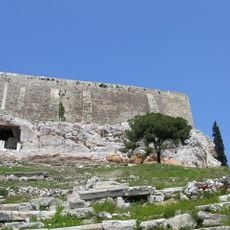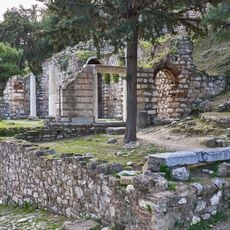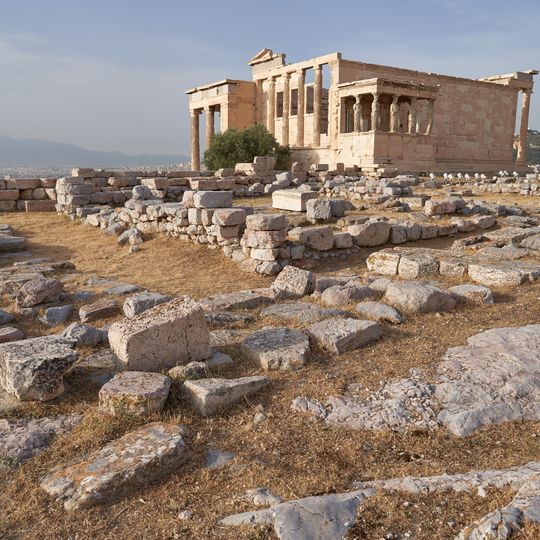
Pandroseion, Archaeological altar in Acropolis of Athens, Greece.
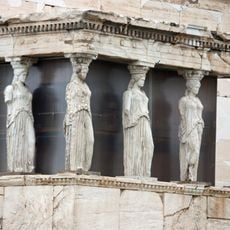
The Pandroseion was an open-air walled courtyard of trapezoidal plan west of the Erechtheion, on the Acropolis of Athens. Inside stood the altar of Zeus Herkeios beneath the sacred olive tree given by Athena, and a small opening on the east side looked toward the Thalassa of Poseidon. Entrances linked it to the Propylaia, the north porch of the Erechtheion and the tomb attributed to Cecrops.
The sanctuary was damaged in the Persian invasion of 480 BCE, when the sacred olive tree and surrounding buildings were burned; the next day a new shoot sprouted from the trunk. In the 5th century BCE it was reorganized as a trapezoidal open-air temenos linked to the Erechtheion, with an entrance on the west and the altar of Zeus Herkeios inside.
The sanctuary bore the name of the city founder's daughter and served as a place where Athenians brought offerings to honor the goddess. People gathered here to participate in religious practices that held meaning for the entire community.
The Pandroseion lies west of the Erechtheion, within the walled Acropolis precinct reached through the Propylaea; its western stoa connected the sanctuary to that gateway. The open-air temenos has no roof or shelter, and the ground around the remains is uneven, so watch your footing.
After the Persians burned the sacred olive in 480 BCE, a new shoot sprouted from the stump the very next day, which was read as a sign that Athena's cult would endure. The tree stood beside the altar of Zeus Herkeios, protector of the courtyard.
The community of curious travelers
AroundUs brings together thousands of curated places, local tips, and hidden gems, enriched daily by 93,361 contributors worldwide.