Monument of Agrippa, Ancient pedestal near Propylaea in Athens, Greece
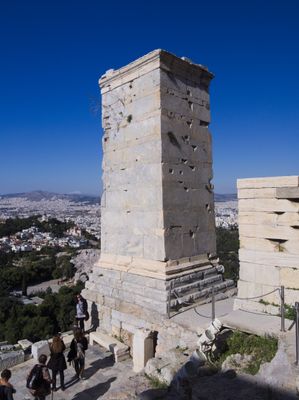
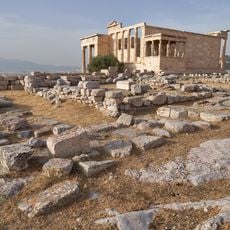
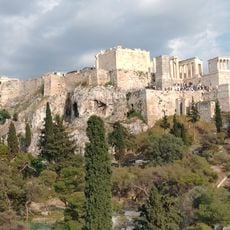
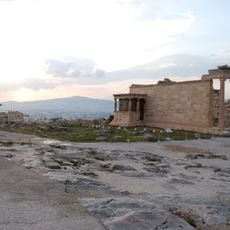
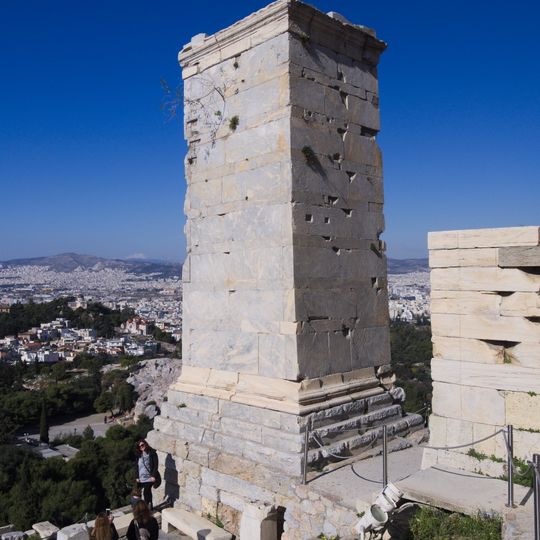
The Monument of Agrippa is an ancient pedestal on the western side of the Acropolis, built from different types of marble. The structure features a tall shaft made of bluish-grey Hymettian marble with a base and crown of white Pentelic marble.
The pedestal was erected in 178 BC by Eumenes II of Pergamum after his victory in the Panathenaic Games. In the first century AD, a statue of Roman General Agrippa was placed on top, giving the monument the name by which it is known today.
The monument honors a tradition of celebrating victories through its original design as a chariot monument. The inscriptions and placement reveal how important such triumphs were to the society of that time.
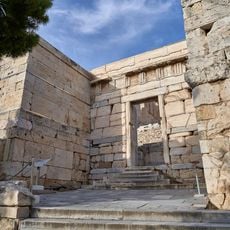
The monument sits directly on the main path through the archaeological site and is easy to reach when visiting the Propylaea. The pedestal is accessible from all sides and can be viewed up close without any special arrangements.
The monument leans noticeably to one side and no longer stands perfectly vertical, a tilt documented by measurements since the late 19th century. This lean is visible to the naked eye during a visit and shows how even massive stone structures change over time.
The community of curious travelers
AroundUs brings together thousands of curated places, local tips, and hidden gems, enriched daily by 91,333 contributors worldwide.