Caves of Apollo, Zeus and Pan, Ancient cave sanctuaries at Acropolis Hill, Greece
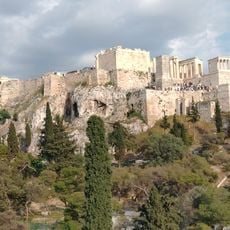
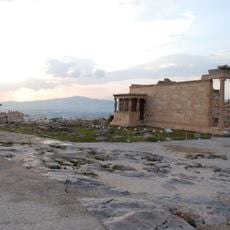
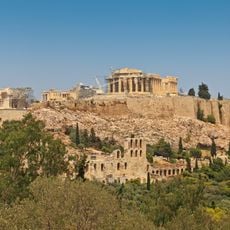
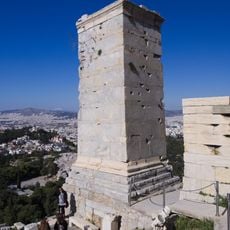
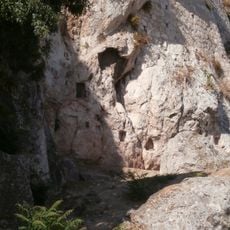
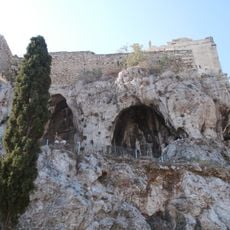
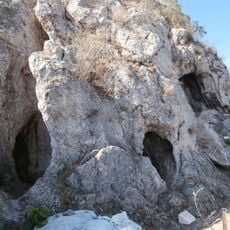
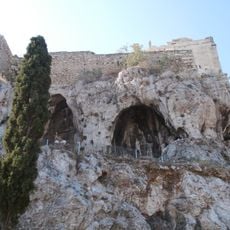
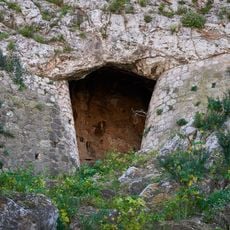
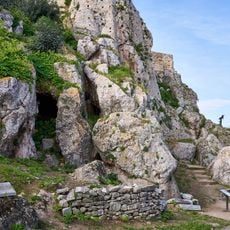
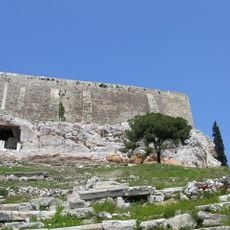
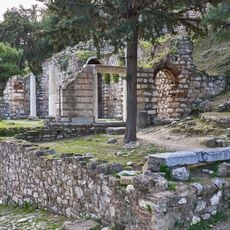
The Caves of Apollo, Zeus and Pan are three openings in the rock on the northwest slope of the Acropolis. The westernmost is a carved cavity with a podium used for viewing the Panathenaic procession. The next cave, dedicated to Apollo Hypoakraios, has marble plaques recording dedications by the nine archons. The middle cave, dated to the 5th century BCE, is attributed to Zeus Olympios or Zeus Keraunios.
The Athenians established these caves as sacred places in the 5th century BCE, using them for religious ceremonies and ritual offerings. Over following centuries they remained centers of devotion, with later inscriptions showing how worship practices evolved over time.
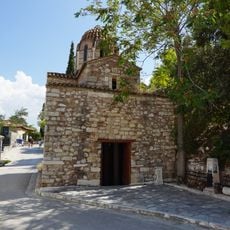
The caves' names record how each was used: Apollo Hypoakraios, "under the heights", where Kreousa bore Ion; the middle cave of Zeus; and Pan's cave, whose cult the Athenians founded after the god caused panic among the Persians at Marathon in 490 BCE. In Christian times the eastern part became a chapel of Saint Athanasius, and fresco traces remain in its niches.
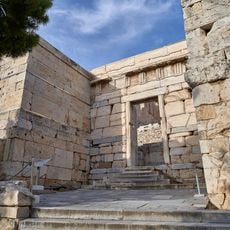
The caves are reached through the main Acropolis complex and entry is included with the standard admission ticket to the site. Wear comfortable shoes and bring water, as the paths are uneven and the sun can be strong during the day.
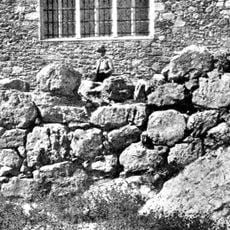
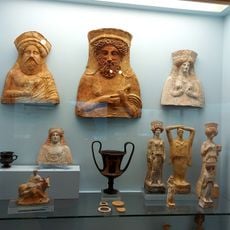
In 1896–1897 Kavvadias uncovered a cave system previously unknown, later labelled D-D1 and D2, on the terrace's eastern edge. Two votive reliefs came from it: one shows the god seated on a rock playing the pipes before a standing nymph, the other, the Pan Relief, places him among other deities. The Pan Relief is now kept in the National Archaeological Museum.
The community of curious travelers
AroundUs brings together thousands of curated places, local tips, and hidden gems, enriched daily by 93,130 contributors worldwide.